

Global Component Shortage Bulletin: Providing regular updates on global component availability and supply chain conditions. Learn more.

Archive

XMA is a Disability Confident Leader!

We are proud to announce that XMA has officially been recognised as a Disability Confident Leader. 

This is the highest level of the government-backed scheme. For us, it is more than an accreditation; it is the external validation of a principle that sits at the core of our business: a diverse, inclusive workforce is fundamental to our success. This achievement comes after 15 months of dedicated work since we were awarded Disability Confident Employer status in April 2023, with a significant focus over the last seven months to reach this Leader level. 

Achieving this required a commitment to tangible action, not just words. Internally, we have focused on improving the physical accessibility of our sites, such as installing new and automatic doors at our Nottingham offices—an upgrade that benefits all our employees. We have delivered inclusive leadership training to our own advocates and have started a culture change by asking and embracing challenging questions about our own processes, ensuring we do not stand still on topics like recruitment. 

A key part of being a Disability Confident Leader is moving beyond our own business to champion inclusion in our wider community. Collaboration has been central to our approach. We have: 

  • Attended several collaborative Employee Resource Group (ERG) events with HPE at their London offices, where we raised awareness for the Disability Confident scheme. 
  • Worked with partners during these events to set SMART goals for disability-focused ERGs. 
  • Opened our own Inclusive Leadership training to representatives from our partners, including HPE, Kocycle, and charities like Reach Learning Disability. 
  • Worked with Reach Learning Disability’s ‘FlowerPod’ to create volunteering opportunities for our Nottingham-based staff, and in doing so, had the chance to promote XMA’s commitment to social value directly to the High Sheriff of Nottingham. Julia Sandhu from Reach Learning Disability had this to say:  

“When companies like XMA work with organisations like Reach and achieve Disability Confident Leader status, they’re not just improving how they work — they’re helping break down those barriers and driving real change. It has been inspiring to work with XMA and to be part of their journey.” 

This status is a direct result of the focused work of our people. Our Disability Confidence Ambassador Alison Warner, who has led this initiative, shared her personal motivation: 

“The world of disability and careers contains a lot of fear for both sides of the recruitment process. I built on my own experiences to get passionately involved in achieving Disability Confident Leader status with XMA so that through the ESG group, employees can make a difference. My aim going forward is not for XMA to stay still, but to achieve higher standards year on year, and for employees to feel confident in disclosing their disabilities.” 

Alison’s words capture our position perfectly. This is not an end-point. It is a milestone that strengthens our resolve to continue building a business where every individual is valued and has the support they need to succeed. 

Android Desktop: An emergency option for when your laptop is broken, or a paradigm shift in client devices?

This is the first in a series of blog posts exploring Android Desktop. Our Head of Pre-Sales, Scott Wright, will be looking at the current state of Android Desktop, following its improvement as release approaches, examining use cases, looking at essential apps & peripherals and more. 

Picture of Scott Wright

Scott Wright

Scott is XMA’s Head of Pre-Sales. An IT industry greybeard, he violated his own rule about being an early adopter when he bought the first Android phone at launch and hasn’t regretted that decision.

What is Android Desktop?  
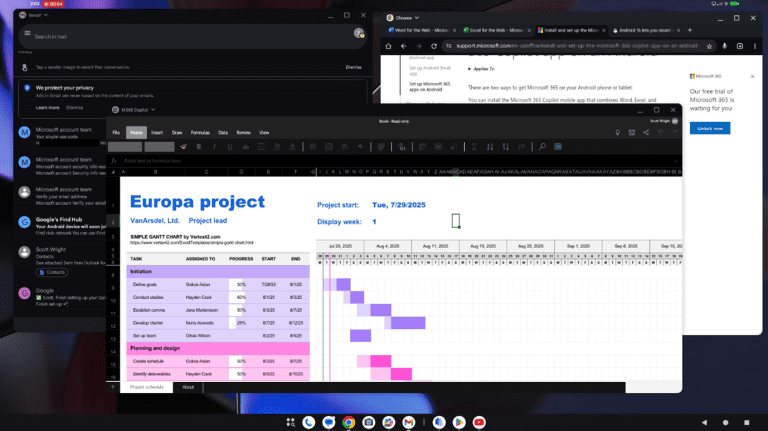
Android Desktop is a desktop-like experience for Android phones when connected to an external display, and typically also to a keyboard and mouse. It provides a larger display area, a taskbar, applications in moveable, resizable windows and so forth with the intent to make your phone a practical device to work on. It is currently available only on beta versions of Android 16 which are available on selected Pixel and other devices but will become a core Android feature. Apple is also working on an equivalent for iPhone but, as usual, they are keeping their cards close to the chest. More on that when there is news. 

A desktop mode for phones, when connected to suitable equipment. is not a new idea. Several phone manufacturers have offered their own takes on this, most notably Samsung with their DeX offering that launched in 2017. DeX was arguably a little ahead of its time, applications were not universally available with a web interface and phone hardware was significantly less powerful than today. There is also a concern with adopting vendor specific solutions, although Samsung, for example, are as far from a fly-by-night company as you can get. The availability of a vendor agnostic solution which is a core part of the Android operating system has put this back onto many organisations’ radars due to potential reductions in devices, benefits for frontline workers and more. 

How to Access Android Desktop 
If you want to try this yourselves then you’ll need a Beta version of Android 16 (ideally the current version QPR1 Beta4 but at least Beta2) and a suitable device. A Pixel 6 or newer is supported and some other vendors do also offer Beta versions of Android to their users. Enrolling in the Beta program and updating your device is quick and easy with a Pixel and you can revert back but do be aware this will likely require a device wipe. For other vendors see their instructions and warnings, some are more involved and complex than others.  

All of the usual caveats around Beta programs do, of course, apply. There will be incomplete functionality, bugs, issues and more so do consider if you should do this to your device. I have a laptop, my personal phone and a spare work phone that just needs the SIM swapping over to be running again so I have lots of options if I hit a problem. Do also note, if this is a work-provided device, then you should seek permission before installing a Beta OS and may need your device profile changing to permit that and to permit access to the developer options (which you will need). 

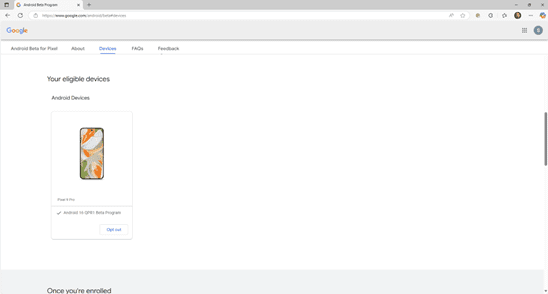
If you are using a Pixel device then go to the “Your eligible devices” section at the link below, opt in and then perform a system update. I found this to be a very straightforward process. 

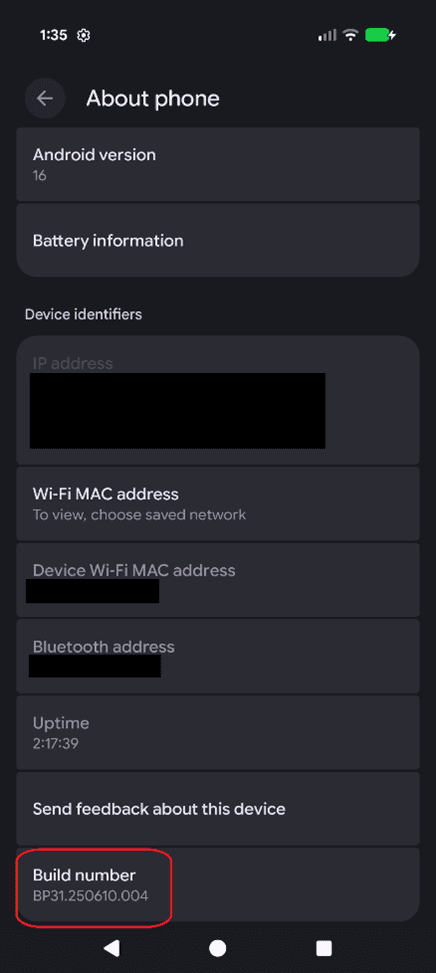
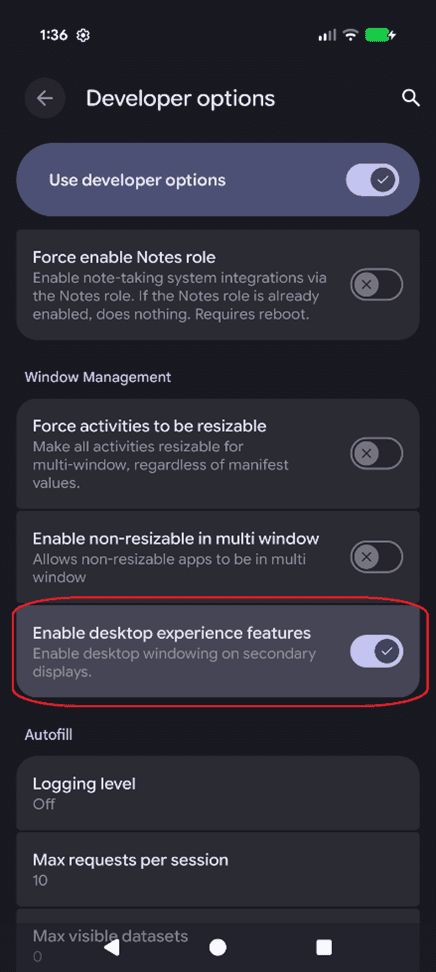
After installing Android 16 Beta then you will need to enable the developer options. To do this go into settings and navigate to About phone > Build number (bottom of the menu). Tap on the build number repeatedly until you either get a message telling you that developer options are enabled or until you are asked to unlock the device (pin, biometrics, etc). The developer options will now be available. It’s a very long menu so search for Enable desktop experience features and enable it.  

Now you can connect your Android device to suitable peripherals, most USB-C laptop docks and docking monitors will work to provide a display, keyboard and mouse to your Android device. 

More To Come 
There are lots of questions to be answered – What’s the best way of accessing M365 applicationsWhat specification of device is needed for a good experience? What are the essential peripherals, both for the desk and when travelling? What apps cannot be used successfully? Follow along with me as I explore what Android Desktop can and can’t do as I try to live with it as a work device. 

The Right Tech for the Academic Year: A Win for Students, Parents, and Your IT Team

We all know the end of summer brings a familiar chaos. For parents, it’s the frantic rush for uniforms, stationery, and the single most important (and debated) item on the list: the student device. For schools and Multi-Academy Trusts, it’s about ensuring the technology you’ve chosen can actually withstand the reality of a new academic year. 

This year, we followed the back-to-school journey of one family to see how the right technology choices can make all the difference.  

Meet the Millers  
Proud mum Sarah has two children heading into demanding years: Chloe is starting a graphic design course at her independent school, and Tom is off to Further Education college. 

The great device debate in their house was short-lived. They’d heard good things about the usual suspects, but after kicking the tyres, they needed technology that could keep up with the daily reality of student life. 


The Right Tools for the Job 

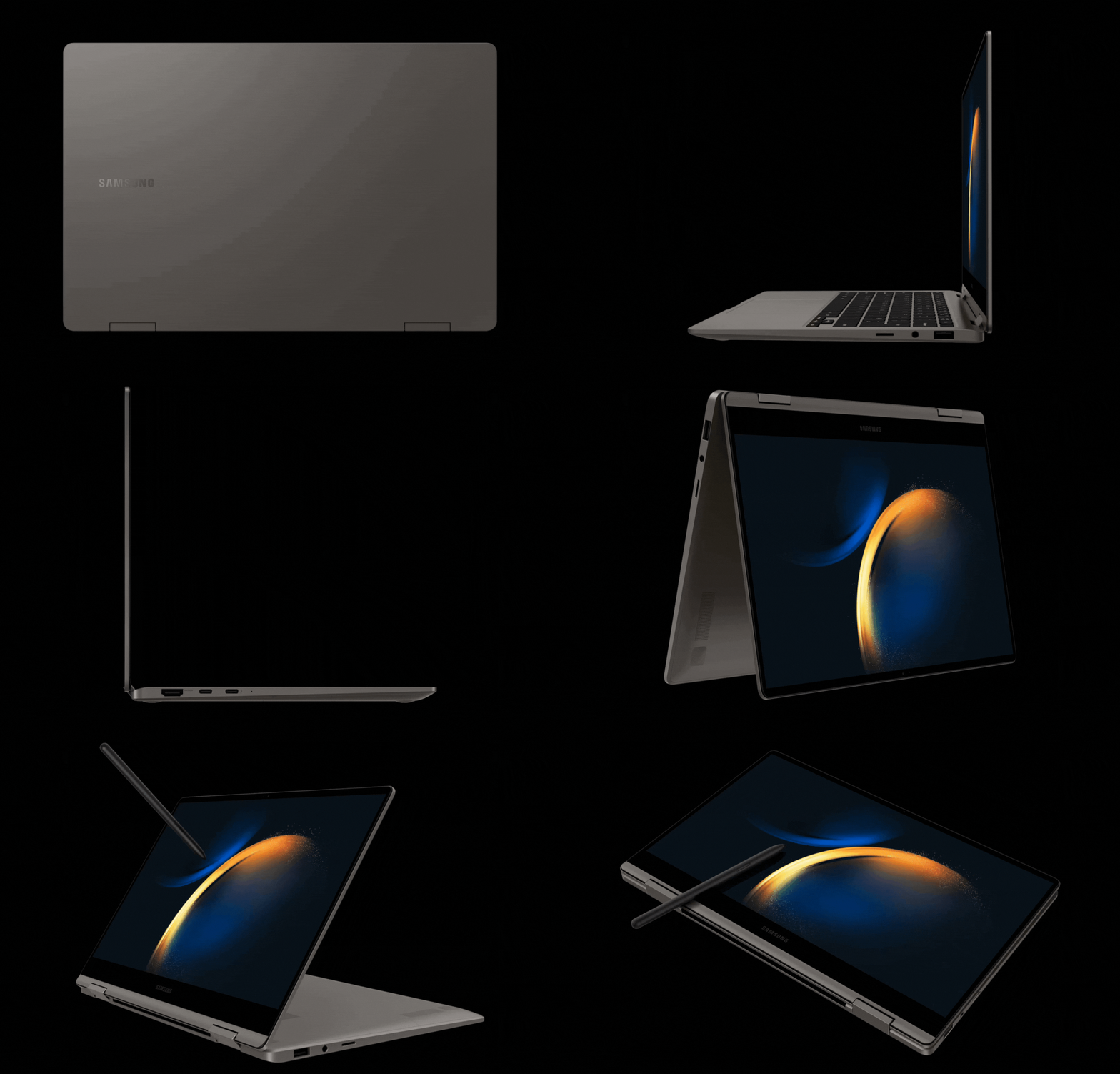
For Chloe, the budding artist, the choice was the Samsung Galaxy Book3 360. As a 2-in-1 device, it gives her the flexibility she needs. She can type up essays in traditional laptop mode, then flip the 360-degree hinge and use it as a tablet for sketching.  

The real clincher was the combination of the stunning Super AMOLED touchscreen and the natural, paper-like feel of the included S Pen. It means the colours in her digital paintings are incredibly vibrant and accurate, giving her a significant advantage in her creative work. 

For Tom, it was all about practicality. He needed a reliable workhorse for his FE course that wouldn’t break the bank. The Galaxy Book4 was the perfect fit. While it’s an affordable, entry-level model, it doesn’t compromise on quality or performance. It’s a sleek, solid all-rounder with a modern Intel® Core™ processor, more than capable of handling his research, reports, and presentations. 


Built for the Realities of Student Life 

Chloe’s day starts in the art studio. She flips her Book3 360 into tablet mode, the high-resolution screen showing every detail of her reference photos. Using the S Pen, she sketches directly onto the screen, the pressure sensitivity allowing her to create fine lines and broad strokes just like a real pencil. In her next lesson, History of Art, she switches to laptop mode to type notes, the full-sized keyboard making it easy to keep up. At lunch, she and her friends gather around her device in ‘tent’ mode to watch a design tutorial – the Super AMOLED screen is so bright and clear they can all see it perfectly, even with the lunchtime glare. The flexibility is a game-changer. 

Tom found himself in a classic student bind: a 15-minute break to prepare for a seminar on a topic he’d only half-read the night before. Instead of panicking, he pulled up the lengthy research article on his Galaxy Book4 and asked Microsoft Copilot to summarise the key arguments. In minutes, he had a clear, concise overview, ready for the discussion. It was a perfect example of working smarter, not harder, showcasing how the device’s built-in AI tools can be a massive help for students on a tight schedule. 

Here are a few other ways these devices are designed for the rigours of education: 

  • All-Day (and then some) Battery: Both Chloe and Tom can leave their chargers at home. The battery life on the Galaxy Book series is huge. If they ever do get caught short, the super-fast USB-C charger can deliver hours of power in the time it takes to drink a coffee.  
  • The Samsung Ecosystem in Action: This is where things get really clever. Tom often jots down notes on his Samsung phone between classes, where they automatically sync and appear on his Galaxy Book4 when he sits down to study. Chloe uses her Samsung tablet as a second screen, giving her a dedicated space for reference images while she works on her main canvas. Sharing work is simple and instant with Quick Share, so there’s no more “the dog ate my homework, sir” or, more accurately, “the email got lost in my outbox”.  
  • Lightweight and Portable: These laptops are incredibly thin and light, sliding easily into a packed backpack without adding bulk.  


Peace of Mind for Parents and IT Directors 

This is where the story becomes particularly relevant for education buyers. A happy parent with a child using a reliable device is a parent who isn’t calling your IT helpdesk. 

What if a student device does have an issue?  

This is where the support comes in. Every B2B Samsung Notebook from XMA includes a 3-year, business-grade warranty as standard. If your device suffers a fault, Samsung will repair your device at our UK service centre – if it can’t be fixed, it will be replaced free of charge. This is a level of practical, responsive support that keeps students learning without disruption. If the devices are part of XMA’s Device-Management-as-a-Service, there’s even less hassle, with 24/7 break-fix, Gold Stock ready to go, and active device monitoring for any hardware and software issues. 

Furthermore, the entire range is protected by multiple layers of security, including Samsung Knox, Intel secure core at the chip level, and Windows Pro, keeping student and school data safe from threats.  

How a Stress-Free September becomes a Lower TCO 

So, what does the Millers’ stress-free September mean for a School or Multi-Academy Trust? 

It means: 

  • Fewer IT Support Tickets: Durable devices and a simple, effective warranty process mean your IT team spends less time dealing with broken hardware and more time on strategic initiatives. 
  • Improved Learning Outcomes: Students with reliable, long-lasting batteries and seamless ways to work across devices are better equipped to stay productive and engaged. 
  • Demonstrable Value: You are providing families with technology that not only performs brilliantly but is built to last the course, offering a lower total cost of ownership and proving that budget-friendly doesn’t have to mean compromising on quality.  

The Samsung Galaxy Book range provides a robust, secure, and high-performing alternative that is built for the specific demands of the education environment. 

Ready to explore how Samsung’s range can benefit your institution? Schedule a consultation with an XMA specialist to see the devices for yourself. 

Contact us at: enquiries@xma.co.uk 

The PSTN and ISDN Switch-Off Is Happening. Your Business Needs a Plan.

The UK’s traditional phone network, the Public Switched Telephone Network (PSTN), which also includes Integrated Services Digital Network (ISDN) lines, is being permanently switched off. The final date for this is 31st January 2027. As of September 2023, it is no longer possible to buy new PSTN or ISDN services.

This is not a simple change. It will affect any device that uses a traditional phone line. This includes not just your office phones, but also other systems such as:

  • Fax machines
  • Alarm systems (intruder and fire)
  • Door entry systems
  • CCTV
  • EPOS (Electronic Point of Sale) terminals
  • Franking machines
  • Telecare and medical alert devices

If your business relies on any of these, you need to act now to avoid service disruption. One year ago, we told you about the initial changes. Now, let’s see if there have been any crucial updates.

Why is this happening?

The PSTN is old technology. It’s expensive to maintain and cannot deliver the speed or reliability required for modern business communications. The move to digital, IP-based services like Voice over Internet Protocol (VoIP) is a necessary technological step forward.

What does this mean for your business?

All voice and data services that currently use the PSTN or ISDN will need to be migrated to an IP-based alternative. This means you will be using your internet connection to make calls and transmit data. The benefits of moving to a digital system include:

  • Cost Savings: Lower monthly fees and reduced hardware costs are common.
  • Flexibility: Your staff can work from any location with an internet connection. It is also straightforward to add or remove users as your business needs change.
  • Improved Functionality: Modern VoIP systems offer advanced features like video conferencing, call routing and integration with other business software.
  • Business Continuity: In the event of an outage, calls can be automatically rerouted to other locations or mobile devices, ensuring you stay connected.

What you need to do

The 2027 deadline is final. To ensure a smooth transition, you should start planning now. XMA can help you by:

  1. Auditing Your Systems: We will identify all devices and services in your organisation that rely on the PSTN or ISDN. This includes not just the obvious, but also the easily overlooked systems like alarms and payment terminals.
  2. Assessing Your Connectivity: We will analyse your current internet connection to ensure it has the capacity and reliability to handle your voice and data traffic. We can recommend and implement any necessary upgrades.
  3. Migrating Your Services: We have partnered with RingCentral, a leading provider of cloud communications solutions, to offer a straightforward migration path to VoIP. We will manage the process for you, from planning to implementation, to ensure a seamless transition with minimal disruption to your business.

Don’t wait until the last minute. The move to all-IP is a significant change, and leaving it too late could result in a loss of service and impact your business operations.

Talk to your XMA Account Manager, or contact us today at enquiries@xma.co.uk to discuss your requirements and create a migration plan that is right for your business.

Why Compact Workstations Are the Future of Hybrid Work

The shift to hybrid and hot-desking models is permanent. For IT teams, this has fundamentally changed hardware requirements. The traditional, bulky desktop tower that once defined corporate IT is impractical for a workforce that needs to operate effectively from various locations, be it a central office, a home study, or a shared workspace. Today’s professionals require compact, powerful, and secure computing that adapts to their location, without compromising on performance. The challenge is to deliver this capability consistently and securely across a distributed workforce. 


The Challenge: Power and Flexibility Without the Bulk 

Many organisations face a difficult trade-off. Their teams need high-performance computing for demanding tasks like CAD, graphic design, and complex data analysis. Yet, the physical constraints of modern offices and home-working environments don’t accommodate large, power-hungry hardware. Bulky towers consume valuable desk space, generate excess heat, and are ill-suited to flexible desking arrangements. While laptops offer portability, they often cannot deliver the sustained, specialised performance of a dedicated workstation, creating a gap between user requirements and device capability. 


The Solution: Compact HP Workstations with AMD Processors 

This is where a new category of device provides a direct solution. HP has engineered workstations that deliver professional-grade performance within compact and mobile designs, specifically addressing the challenges of hybrid work. 

  • HP Z2 Mini G9: As the world’s most powerful mini workstation, this device packs high-end performance into a versatile chassis that is small enough to be mounted behind a monitor or under a desk. It can be configured with professional-grade NVIDIA RTX graphics, making it capable of handling demanding 3D workflows, and holds Independent Software Vendor (ISV) certifications for key applications like Autodesk and SolidWorks. This guarantees hardware stability and performance for the critical software your teams rely on, removing guesswork and instability. 
  • HP ZBook Power G11 A: For users who require workstation capability on the move, the ZBook provides the processing and graphics power to run demanding applications from any location. It’s not simply a powerful laptop, it is a mobile workstation. Configured with AMD Ryzen™ PRO processors and professional NVIDIA RTX™ Ada Generation Laptop GPUs, it delivers the sustained performance needed for video editing, 3D rendering, and data analysis without the throttling common in thinner, non-specialised devices. It removes the choice between mobility and performance, equipping remote and hybrid workers with a single, reliable device for all their professional needs. 


The AMD Ryzen™ PRO Advantage 

Integral to the performance and security of these workstations are the AMD Ryzen™ PRO Processors, built for modern professional environments. Feel secure with AMD Memory Guard, which encrypts system memory in real-time to protect against physical attacks if a device is lost or stolen. For IT teams overseeing a fleet of remote hardware, AMD PRO manageability simplifies deployment and maintenance. Easily perform out-of-band management, deploy images, and push security updates to devices anywhere. 


The Space, Power, and Security Trifecta 

The combination of HP’s compact engineering and AMD’s processor technology directly solves the three core challenges of modern IT provisioning: 

  • Space-Saving Flexibility: The small footprint of devices like the Z2 Mini frees up desk space, enabling cleaner, more flexible hot-desking and home office setups. 
  • Workstation-Class Power: Users can run professional applications for CAD, design, and data science without the performance throttling often found in non-specialised hardware, backed by ISV certifications for stability. 
  • Robust Security & Manageability: IT teams get devices with built-in, hardware-level security and the fleet management tools they can depend on to secure and maintain a distributed workforce. 


Why XMA? 

Choosing the right hardware is only the first step. XMA is the partner that helps organisations successfully integrate these solutions. We provide the practical services required to move from procurement to productivity. Our teams can assist with choosing and configuring the precise specifications your users need. We offer flexible leasing and finance options to make technology acquisition more predictable, alongside deployment support to get your new workstations imaged, asset-tagged, and delivered to users, wherever they are. We also manage the sustainable and secure disposal of your legacy equipment. 

Discover how HP compact workstations can equip your hybrid teams. Contact an XMA specialist today. 

Share with your network
WhatsApp
X
LinkedIn

Cutting Through the Red Tape: Your Simple Guide to TePAS 2 & LINK4

Let’s be honest, keeping up with technology in the public sector can be a minefield. You’re under constant pressure to upgrade, stay secure, and make every penny count. Whether you’re in healthcare, education, or local government, the demand for smarter, faster, and more reliable IT is relentless. 

That’s before we even start talking about procurement. Just when you know what you need, you hit the wall of frameworks, lots, and sector-specific rules. It’s enough to make anyone’s head spin. 

That’s where we, XMA, come in. We’re here to make it straightforward. We’ll help you use TePAS 2 and LINK4 to get the tech you need, without the usual headaches. 


TePAS 2: Your Go-To for Public Sector Tech 

Think of the Technology Products & Associated Services 2 (TePAS 2) framework (RM6098) from the Crown Commercial Service as a pre-approved catalogue for pretty much all your IT needs. 

Working with XMA on TePAS 2 means you can easily get your hands on: 

  • All the gear: From laptops for your team to the complex systems running in the background. 
  • The right software: Covering everything from security to everyday productivity tools, all properly licensed. 
  • Expert help: Need someone to manage your devices, support your users, or guide a big IT project? We’ve got you. 
  • Greener choices: We’ll help you find IT solutions that meet your environmental and social goals. 

The beauty of TePAS 2 is that it’s built to be flexible. It doesn’t matter if you’re outfitting a new school, modernising council services, or future-proofing a hospital’s IT – it’s designed to fit. 

And with XMA’s know-how, you won’t just buy stuff faster. You’ll make smarter choices that deliver real value for years to come. 


LINK4: Sharpening the Focus for Healthcare (and Beyond) 

While TePAS 2 covers a lot of ground, LINK4 (SBS10514 / NOE.0633) is laser-focused on the specific demands of healthcare and clinical environments. But don’t let that fool you – it’s still a great option for the wider public sector when the fit is right. 

LINK4 makes it simpler to buy: 

  • Specialist healthcare IT: The kind of hardware and equipment designed for patient care. 
  • Tailored support: Services that understand the unique pressures of clinical settings. 
  • Essential tech add-ons: All those peripherals and bits of kit that are vital for delivering healthcare. 

So, whether you’re upgrading devices for frontline hospital staff or improving how a local authority health team handles sensitive data, LINK4, endorsed by NHS Supply Chain, is a trusted route. 

And with XMA by your side, we’ll make sure you’re using the right framework for the right job, every time. 


Why Bother with Frameworks Anyway? 

Frameworks like TePAS 2 and LINK4 make life easier by: 

  • Keeping you compliant: They’re built around public procurement rules, so you don’t have to worry. 
  • Getting you better value: Competitive pricing and vetted suppliers are part of the deal. 
  • Saving you time: Less paperwork and faster processes mean your team can focus on what really matters. 
  • Opening doors to innovation: You get access to the latest tech from trusted suppliers like us. 


The XMA Difference: We Make Complex, Simple. 

At XMA, we don’t just want to sell you technology. We want to help you use it to make a real difference in the public sector. We’re about partnering with you to achieve results that are secure, sustainable, and ready for whatever comes next. 

Navigating TePAS 2 and LINK4 doesn’t have to be a nightmare. With XMA, it’s a clear path to getting things done. 

Ready to connect, secure, and simplify your tech journey? Let’s talk. 

Start a conversation with us at enquiries@xma.co.uk or visit our frameworks page to learn more. 

Share with your network
WhatsApp
X
LinkedIn

Your AI Strategy, Simplified: Practical Guidance from XMA

Artificial Intelligence. It’s a term that dominates headlines and boardroom discussions. Yet, for many organisations, a fog of complexity and uncertainty surrounds AI, making it difficult to see a clear path forward. This challenge is compounded by existing business pressures. Organisations are grappling with a 3x increase in cyberattacks between 2023 and 2024 and losing three weeks of productivity per year for every 39% of employees seeking IT support. It is no surprise, then, that 39% of organisations also struggle to identify clear use cases for AI amidst these immediate demands.

At XMA, we understand this. Our role is to demystify AI for our customers. We believe the utility of artificial intelligence shouldn’t be obscured by technical jargon, but should be a strategic tool that is accessible and aligned with your specific business objectives.


Moving Beyond the Hype: A Focus on Business Outcomes

The journey into AI doesn’t need to be a leap into the unknown. We see AI as a spectrum of opportunities, from improving data analytics and automating processes to redefining customer experiences and creating new business models. The key is to first identify where AI can deliver the most significant impact and value for your specific organisation.

Our approach is built on understanding your strategic priorities and then mapping AI capabilities to those goals. We help you cut through the noise, focusing on practical applications that drive measurable value, whether that’s using AI to increase productivity, gain deeper insights from your data, or create more efficient services.


Answering the Key Questions for Leadership

Many leaders we speak to are working through the same fundamental questions about AI adoption. Our process is designed to provide clear, direct answers.

  • How do we separate realistic AI applications from fleeting trends? We focus on your operational data and strategic goals to identify high-value, achievable projects, not speculative technology trends. This ensures resources are directed at applications with a clear business case.
  • What are the practical first steps to integrating AI into our existing infrastructure? We begin with an assessment of your current infrastructure to establish AI readiness. This allows us to create a phased, practical roadmap for integration that minimises disruption and aligns with your existing technology stack.

  • How can we ensure AI adoption is secure, ethical, and delivers a tangible return on investment (ROI)? Our framework incorporates governance and security from day one. We build ROI models based on defined outcomes, such as cost reduction or productivity gains, ensuring every AI initiative is accountable and its value is demonstrable.

  • What skills and cultural shifts are necessary to use AI effectively? Successful AI adoption is as much about people and processes as it is about platforms. We provide guidance on developing a data-driven culture and upskilling your teams, ensuring your organisation is prepared to operate the technology it adopts.

Your Next Step: A Clear Path to AI Clarity

The potential of AI is significant, but realising it requires a clear vision and a credible partner. It’s time to move beyond the buzzwords and start building a practical AI strategy that delivers tangible benefits to your organisation.

Ready to gain a clear perspective on how AI can benefit your business? We invite you to book an Executive Briefing on Demystifying AI. This tailored session is designed for senior leaders to discuss specific challenges, explore relevant AI opportunities, and understand how XMA can work with you to navigate the AI landscape with confidence.

Book your Executive Briefing today and start your journey to AI clarity.

Share with your network
WhatsApp
X
LinkedIn

Why Mission-Critical Public Services Need Mission-Ready Infrastructure

When the network goes down, public services stall. In an NHS trust, it can disrupt access to patient records on an A&E ward. For a local council, it could halt the processing of essential benefits. For a police force, it means delayed access to real-time data in the field. In education, it blocks access to learning portals for thousands of students. 

The reliability and security of the network are no longer just IT concerns, they are fundamental to the delivery of front-line public services across the UK. 


Growing Demands on Outdated Foundations 

Public sector organisations are under pressure to digitalise services, improve operational efficiency, and meet the evolving expectations of the citizens they serve. However, many are attempting to build these modern services on network infrastructure that was not designed for today’s demands. 

This creates a cascade of operational risks: 

  • Siloed and Complex Systems: Many organisations operate with disjointed network and security architectures, with separate pockets of compute and storage. This legacy complexity makes centralised management, security policy enforcement, and clear visibility difficult to achieve.  
  • Increased Reliance on Digital: The sheer volume and velocity of data traffic from modern, cloud-centric applications require a network that can keep pace. Traditional architectures often struggle, leading to performance bottlenecks that impact user experience. 
  • An Evolving Threat Landscape: As services become more digital, their attack surface expands, making cybersecurity a primary concern for organisations of all sizes. The security architectures in many data centres have not advanced at the same rate as the network fabrics themselves, leaving them vulnerable.  
  • Resource and Budget Constraints: Public sector bodies face the persistent challenge of delivering more with less. They need solutions that reduce appliance sprawl and the associated infrastructure and maintenance costs, while also freeing up valuable IT staff from day-to-day firefighting.  


A New Standard for Mission-Ready Infrastructure 

To meet these challenges, public sector organisations need to move beyond legacy designs. They require a new standard of “mission-ready infrastructure” built on a foundation of modern, data centre networking. This approach is defined by a set of core capabilities designed for the specific pressures of the public mission. 

  • Zero Trust Security Built-In: A Zero Trust model is an essential security practice that assumes an attacker is already present in the environment. This means moving security closer to applications by inspecting all east-west traffic within the data centre, applying policies to prevent bad actors from moving laterally across the network.  
  • Automation Driven by AI: Manual, reactive processes are no longer viable. The modern network requires automation and AI-powered operations (AIOps) to integrate with cloud platforms, establish and secure connections, and manage the infrastructure. This allows IT teams to automatically detect anomalies and receive actionable solutions, freeing them to focus on high-value activities.  
  • Hybrid and Cloud-Ready: Infrastructure decisions must be driven by application and workload placement, not the other way around. A mission-ready network supports a hybrid reality, providing a consistent operational model across on-premises data centres, colocation facilities, and public clouds.  
  • Scalable, Consumption-Based Models: To manage budgets and meet sustainability goals, organisations need to move away from cycles of over-provisioning. A flexible, pay-as-you-go consumption model allows for elastic IT, so you only pay for what you use, when you need it.  


How XMA and HPE Aruba Networking Deliver 

As a compliant specialist for the UK public sector, XMA provides the solutions and expertise to build this mission-ready infrastructure, in partnership with HPE Aruba Networking. This is not a theoretical model; the technology is available today. 

The HPE Aruba Networking CX 10000 Series switch, for example, represents a new category of data centre switch. It combines high-performance Ethernet switching with an embedded Data Processing Unit (DPU) to create a distributed services architecture.  

This delivers tangible benefits: 

  • Distributed Services at the Edge: Instead of bolting on security appliances, a distributed services switch integrates functions like micro-segmentation, east-west firewalling, NAT, and encryption directly into the network fabric at the top-of-rack. This brings security and services closer to the applications, reducing latency and complexity.  
  • Security Without Compromise: This architecture extends Zero Trust deep into the data centre. It provides the scale and performance needed to secure mission-critical workloads without requiring software agents on servers, which frees up valuable CPU cycles for applications.  
  • Flexible Delivery with HPE GreenLake: The entire infrastructure can be delivered as a service through HPE GreenLake. This provides a cloud-like experience wherever your applications and data live, with a single contract and a pay-as-you-go model that aligns with public sector budget realities.  


Infrastructure for the Front Line 

  • NHS Trust: By distributing security services to the top-of-rack switch, a trust can isolate critical clinical applications and patient data, helping to meet compliance mandates and improving system uptime without adding costly new appliances. 
  • Local Council: A council can use a distributed services architecture to securely integrate data between departments, creating a unified platform for citizen services while ensuring strict data sovereignty and access controls are maintained. 
  • Police Force: Real-time data sharing from control rooms to frontline officers is critical. A modern, automated network provides the secure, low-latency connectivity needed to ensure this information is available without disruption. 
  • University: A distributed architecture provides the ability to micro-segment the network, safely isolating student, staff, research, and operational traffic while delivering secure, high-performance access for a hybrid campus environment. 


Your Mission is Our Focus 

In the public sector, infrastructure is now inseparable from the mission. Outdated networks are no longer a technical debt to be managed; they are a direct risk to service delivery. 

Building a secure, scalable, and automated network is the foundation for a resilient and innovative public service. It is what enables your organisation to meet its objectives, safely and efficiently. 

To learn more about the technical foundations of a modern network, download the HPE “Five Design Principles for a Smarter Data Center” brochure.  

To discuss how your organisation can build its own mission-ready infrastructure, book a consultation with an XMA public sector specialist today. Contact your XMA Account Manager or email enquiries@xma.co.uk

Share with your network
WhatsApp
X
LinkedIn

Drive Efficiency and Modernisation in Your Public Sector IT

Read The White Paper Now

Public sector IT teams are constantly under pressure, navigating tight budgets, stringent security demands, and the relentless need to deliver more with less. If you’re looking for strategies to enhance public service delivery through smarter IT operations, our new deep-dive, “Driving Efficiency and Modernisation in Public Sector IT with ManageEngine,” is a must-read. 

This insightful paper, brought to you in partnership with ManageEngine, explores how to transform the unique challenges faced by public sector IT into opportunities for innovation and improved service. 

Inside, you’ll discover how ManageEngine’s comprehensive approach can help your organisation: 

  • Move beyond fragmented tools towards a unified IT command centre, breaking down operational silos and providing holistic visibility across your IT environment. 
  • Navigate complex compliance and data security needs with flexible deployment models, including robust on-premises and private cloud options, ensuring you maintain crucial control over sensitive data. 
  • Optimise stretched budgets and achieve greater financial predictability by consolidating solutions and exploring flexible financial models. 
  • Free up your skilled IT professionals from routine tasks by leveraging powerful automation capabilities embedded across a wide range of IT functions, allowing them to focus on strategic initiatives and service improvement. 

We delve into how these distinct capabilities come together to help public sector organisations streamline operations, optimise resources, and drive meaningful digital transformation. It’s about enabling your IT department to become a more strategic partner in delivering excellent public services. 

Ready to explore how you can enhance efficiency and modernise your IT operations? Read on! 

Read The White Paper Now

To learn more, contact your XMA account manager or email us at enquiries@xma.co.uk.  

Share with your network
WhatsApp
X
LinkedIn

Inside the University of Lincoln’s State-of-the-Art ASUS Republic of Gamers Lab

The University of Lincoln needed to revitalise its outdated computer labs. Their vision was to create a state-of-the-art facility to attract top student talent and support advanced academic work. By partnering with XMA and ASUS Republic of Gamers, this vision became the impressive Republic of Gamers Lab. 

Here’s a snapshot of the project’s success: 

  • A World-Class Immersive Facility: The lab now features over 140 high-performance PCs, including nearly 60 premier Republic of Gamers-branded systems. The setup is enhanced with ultra-wide ASUS TUF monitors, a full suite of Republic of Gamers peripherals, and a bespoke, retro 80s-themed art wall. 
  • A Versatile Hub for Innovation: This is more than just a computer lab. It’s a versatile space designed to support demanding fields like AI, robotics, and game design. It also serves as a dynamic venue for hackathons and game jams, fostering a strong sense of community. 
  • A Partnership Delivering Tangible Results: The strategic move to high-performance Republic of Gamers hardware resulted in delivering performance where it matters. The lab’s striking aesthetic and strong branding also serve as a powerful marketing asset for the university. 

See the full story behind this incredible transformation. 

Read the full case study now 

Share with your network
WhatsApp
X
LinkedIn

Fill in the Form to Download the Case Study

Fill in the Form to Download the Case Study

Fill in the Form to Download the Case Study

Skip to content
Monitoring by Hotjar Monitoring by Hotjar