Brexit Committee Update January 2019
Brexit News – January Update
With much heightened activity around Brexit, this XMA update is written following the sizeable defeat of the Withdrawal Agreement Bill in the House of Commons and the recent instruction that the Bill might pass if the EU agreed to significant changes in the backstop arrangements.
XMA’s Brexit committee can take no comfort in the UK Parliament’s stated desire to avoid a ‘No-Deal’ scenario on 29 March and continues to follow government advice to make best preparations for such an eventuality.
Key elements
Logistics
Much of the sector are highlighting the extreme difficulties that would arise in a ‘no-deal’ scenario including XMA’s parent company and main distributor (Westcoast) whose lead courier into Europe – Europa, state, that if either the UK or EU customs were not ready, this could lead to significant delays at channel ports. The majority of Westcoast’s and XMA’s import and exports come/go through Dover-Calais. At present, the likelihood of such customs readiness is extremely low and hence customers will experience both shortages and delays in receiving goods. Perishable goods are likely to get priority leading to greater delays for IT and consumables.
Many PCs and Servers are built to order in Eastern Europe and XMA are working with manufactures and customers to ensure forecasted products can be held locally in the UK. Our parent company Westcoast have purchased increased warehousing space to accommodate such requests and XMA are advising all customers to forecast demand beyond March 29 and engage with your XMA account manager to ensure XMA can place appropriate forward orders on your behalf. Post 29 March, XMA recommend that customers should attempt to order stock available in the channel and reduce their reliance on specific build to order devices.
Through our parent company (Westcoast), XMA are also stocking increased quantities of a wide range of products from major vendors that are realising their supply chain is likely to be disrupted. Whilst all vendors have been engaged, all have an array of plans to minimise disruption. However, many will involve XMA taking increased inventory which XMA are ready for.
As the OEM of Viglen Desktop PCs, Ultrabooks and Chromebooks which are assembled in the UK, XMA have established all known customer forecasts for 2019 and have pre-ordered components to meet projected demand plus anticipated additional demand in the event that supply constraints are experienced across Europe.
Ireland
Through Westcoast Ireland, XMA are able to deliver next day to the majority of the Irish Republic and Northern Ireland from the stock based in the UK. Whilst XMA are working with Westcoast to anticipate increased stockholding in its Irish facility in Tallaght, Dublin – this will be limited and hence Westcoast have a strong engagement with their delivery partner Primeline to ensure goods are delivered either through Dublin or Belfast, whichever is speedier. Delays are inevitable in their opinion though.
Much the above delays will lead to increased cost of delivery which Westcoast will incorporate into the cost of the product and pass onto customers.
Exchange Rates
This is the Brexit Committee’s biggest concern given the general indication is that the British ports and customs processes are not yet adequately prepared for a no deal Brexit. A small delay will potentially cause huge delays to goods deliveries in both directions and non-perishable goods will not be prioritised. As a result, we are looking to take the following steps:
Tariffs
XMA’s parent company Westcoast’s Data Governance Office are working hard with vendors to ensure commodity codes are accurate and stored so that all paperwork contain appropriate identification for customs to clear/obtain excise duty. Whilst there are very few products and regions that are anticipated to bear tariffs and Westcoast have not identified any on WTO terms at present – this may not always be the case. Accurate identification of goods will be critical and forms the basis of much of XMA’s / Westcoast’s work at present.
Paperwork
XMA and Westcoast will use outsourced freight forwarders to process paperwork/customs waybills. Most of XMA’s / Westcoast’s key suppliers are readying themselves for the increased workloads.
Incoterms
XMA receive most goods Delivery Duty Paid. If XMA become responsible for any duty or carriage – these will be included in the cost of the product and passed on to customers. Customers should be aware of any changes of terms from their suppliers and XMA will keep customers informed of any agreed changes and their effect.
Contracts
All key contracts cover the UK and no vendor with an existing all of EU and EEA contract with XMA has yet proposed a constriction to the UK only. All have expressed their intention to include the UK as a region on the existing contract
Whilst there is still much uncertainty, the significant short/medium term issue affecting XMA customers is delay at the ports. This will be mitigated with a signing of the Withdrawal Agreement and will allow the UK to build more robust custom procedures where required in collaboration with the EU. XMA will continue to lobby parliament through our parent company Westcoast.
For any questions or queries contact our XMA Brexit committee at approvals@xma.co.uk
Read XMA's next Brexit Committee Update
Toshiba’s 2-in-1 for your organisation

In recent years we have been seeing a rise in the use of 2-in-1 laptops or convertible notebooks, often referred to as detachable devices. There are many reasons for this growth, with the ‘detachable tablets’ being seen a fresh approach to the market and a more flexible and versatile device for working environments, as well as the added increase in the need for businesses and students to go portable.
Many buyers will be considering which device is best suited and why. Here we look at the newly launched Toshiba Portégé X30T which offers strong competition to this market.

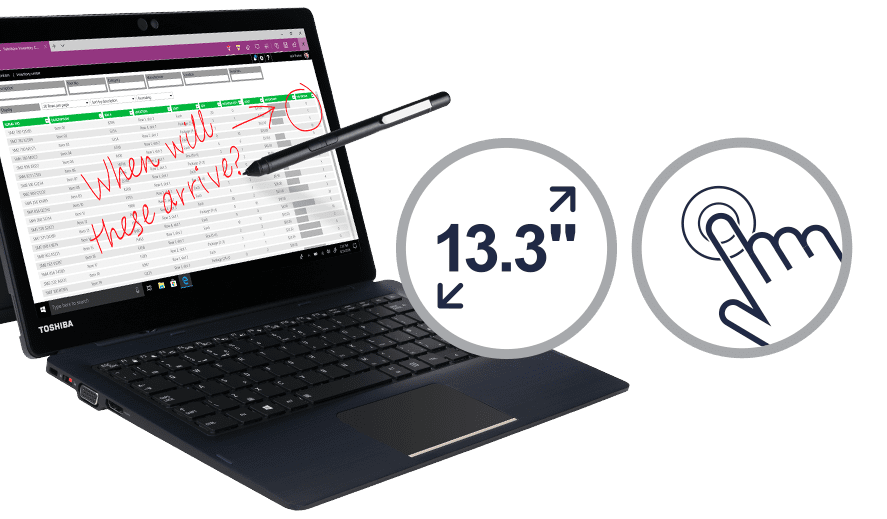
The Portégé X30T uses a full-size port layout in a tablet-style freedom. Featuring Intel 8th Generation processors and ultra-fast SSD storage delivers the unthrottled performance you’d expect, making light work of heavy tasks. With proven physical security and durability meets military standards MIL STD 810G and has been tested to pass TUV HALT standards which simulate three years’ usage.
Other features include:
- Up to 15.5hr battery life
- Optional LTE to keep you online
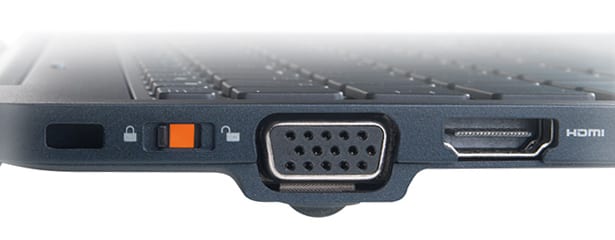
- Full size port layout
- Bio-metric multi-factor authentication for added security
- Military Grade robustness
High performance creative tablet
Also able to be used as a high performance tablet with a 13.3″ touchscreen and kickstand, you can boost your creativity with best in class hand writing or drawing via the optional Toshiba Universal Stylus Pen with Wacom AES Pen Technology optimised for Windows Ink.
The Standard of Toshiba Portégé X30T
What is very interesting about the Toshiba Portégé X30T is that you do not need to purchase a keyboard dock, as it comes bundled as standard, still with a battery life of an astonishing 15.5 hours.
There are optional accessories, to enhance your mobile performance:
- Sleeve protector
- Travel keyboard
- Ultra slim keyed cable lock
The Portégé X30T is available to buy by speaking to our team
or you can buy online by visiting the XMA store
Dell EMC Modern Server Infrastructure can make a massive difference

Do you wonder how making the move to implement a modern Server Infrastructure can dramatically accelerate IT transformation?
In today’s digital economy, faster IT typically results in a competitive business advantage. A modern IT infrastructure is critical if you want to stay ahead of the game, because it comes with higher levels of process automation—which, in turn, drives increased speed, agility, scalability, reliability and cost-savings.
Implementing a modernised infrastructure is one of the fundamental steps in the journey towards transforming IT. Dell EMC offer Server Solutions designed to deliver IT transformation without compromise.
What makes for a modern Server Environment?
Essentially, it’s an infrastructure that focuses on operational cost-efficiency and puts automation at the forefront, this is achieved technology that can offer:
- Scalable business architecture
- Intelligent automation
- Integrated security
Implementing a smart server refresh to the latest Dell EMC technology is a decision that’s likely to pay for itself several times over in terms of operational improvements and cost efficiencies and IT maturity.
Additionally to this, organisations that operate modern server environments can see many tangible benefits:
- Faster application deployments that are more responsive to the rest of the business.
- Ability to move staff away from routine management to focus on more strategic IT projects.
- Operate compute environments they believe are as good as or better than public cloud services in terms of cost, agility, scalability and security.
If you want to discuss the benefits of Dell EMC Server Solutions, contact us on 0115 846 4000.
If you’d like to find out more about refreshing your Server Technology, use the contact form below to get in touch today.
Brexit Committee Update December 2018
December 2018 update from XMA Brexit Committee.
The latest XMA Brexit Committee meeting took place after the recent vote of ‘confidence’ in the Prime Minister. It is the Committee’s opinion that the likelihood of a ‘no deal’ Brexit increased and as such we are looking to firm up our position in relevant areas.
XMA’s objective is to minimise the effects of Brexit on trading and we are ensuring it does all it can to mitigate the impact of ‘no deal’. The agility and flexibility that XMA is renowned for will stand our business in good stead to help customers and vendors alike.
The British Chamber of Commerce has produced a thorough Brexit Checklist and we have found this a constructive way of enabling us to review all the no deal issues that may arise. The checklist can be found at https://www.britishchambers.org.uk/page/brexit/business-brexit-checklist and we recommend readers of this statement use it for their own preparedness. The checklist provides plenty of links to other official guidance. Your local Chamber of Commerce should also be of help for specific queries.
Workforce
XMA is taking steps to support its EU27 citizen employees – particularly those applying for the EU Settlement Scheme. This scheme is due to be open between March 2019 and 30 June 2021. Further information is available on the Government website, including an employer toolkit.
The future staffing of the business may be affected by UK immigration controls and travel between XMA established countries may also be affected. XMA will look to assist staff with their visa applications (if necessary).
Cross-Border Trade
XMA is ready with customs procedures and has expertise within the business to process imports and exports from/to the EU (as we do with non-EU countries today).
We are still investigating whether any goods are affected by tariffs (controlled goods), but it appears at this time that all IT and Consumer Electronics goods do not attract WTO tariffs. Appreciating that this is not guaranteed to continue, XMA will be training staff to ensure customs procedures can be met.
Potential delays
This is the Brexit Committee’s biggest concern given the general indication is that the British ports and customs processes are not yet adequately prepared for a no deal Brexit. A small delay will potentially cause huge delays to goods deliveries in both directions and non-perishable goods will not be prioritised. As a result, we are looking to take the following steps:
- increase the size of XMA’s available storage capacity by working closely with our Tier 1 supply chain partners.
- agree with vendors stocking models that will mitigate some aspects of the delays.
- ensure that XMA has local configuration facilities in place to mitigate the, at times frustrating, channel tendency to configure a unique sku from the vendor (generally manufactured within the EU at present).
- seeking legal advice to assess whether a no deal Brexit can be considered ‘Force Majeure’ when it comes to late delivery penalties/service level agreements. Clearly any delays will be out of XMA’s control however, if necessary, XMA is standing by to amend any contract where time of delivery is the essence.
- working closely with our parent company (Westcoast) to investigate stocking capability within Westcoast’s Irish facility, where goods will be held as necessary to ensure a next day service to Irish customers continues. Westcoast’s courier to Ireland will increase its ability to ship via Northern Ireland where necessary.
Tariffs
XMA is reviewing the HS (international classification system) codes for all products we sell/distribute. It appears that there are no tariffs on most goods at present, although with current trade barriers being erected between the USA and China, continued vigilance will be required.
All import or export tariffs will be passed on through price increases from vendors or increases from XMA. This is in line with XMA’s existing terms and conditions of sale.
Rules of Origin
We understand that all XMA manufacturer suppliers are responsible for determining the source of their goods, yet we are writing to all to verify they are able to produce evidence upon request. As the manufacturer of Viglen products, XMA can evidence the source of all of our goods.
Other Customs points
XMA is not currently a member of an HMRC trusted trader scheme. We are assessing whether this would be advantageous, yet XMA is already fully conversant with Incoterms and Intrastat reporting.
VAT
Our parent company (Westcoast) has all necessary country specific VAT registrations to support customer purchases based all over the EU. Their in-house VAT experts are assessing any import VAT issues, yet most imports fall outside the thresholds.
Currency
XMA has a currency fluctuation policy and significant movements are passed on to the customer. We anticipate significant fluctuation in case of no deal, leading to significant and immediate price rises from vendors. XMA will ensure such rises are well communicated with as much notice as the vendor allows.
Intellectual Property
XMA hold UK Trademarks.
Contracts
A full review of customer contracts where EU law/EU geography is specified is underway.
EU Regulations
Notwithstanding EU regulations will cease to have direct effect on the UK once it leaves the EU, the UK has taken steps already to transpose most EU regulations into English law in any event (e.g. personal data or waste packaging). We therefore do not anticipate a material effect on the UK’s ability to comply with matters such as safety or transfer of personal data post departure from the EU.
Competition and State Aid
Changes made to competition regulation are unlikely to affect XMA or its business practices in the short term.
For any questions or queries contact our XMA Brexit committee at approvals@xma.co.uk
It’s all plain sailing for teacher workload management
With the DfE challenging the tech industry to revolutionise education , it really was no surprise to see “teacher workload” identified as one of the “five key opportunities” to address.
Edtech can play a vital role in enhancing and streamlining work related processes. Whilst at the same time, helping improve student learning outcomes and increasing effective and efficient classroom productivity for both teachers and students.
Our role as edtech specialists, perfectly positions us to support our customers in addressing this challenge, by always putting teaching first and championing the use of technology.
Here’s our thoughts on how technology can bring efficiency to some of the common teaching struggles.
Marking and Feedback
Google Forms
Relieve the pressure of marking tests by hand with self-marking tool such as Google forms where online assessments are easily built, and the task of marking multiple type answer questions can be automated.
Apple Schoolwork
Whether the feedback is in the classroom or in the next lesson, with Apple’s Schoolwork app on iPad, you can easily distribute, collect and feedback on assignments and collaborate with students 1:1 from anywhere – in real time. And when using Pages, Numbers or Keynote, you can instantly add written or verbal feedback directly to their work.
Microsoft Teams
Using Microsoft Teams, you can create, grade and feedback on assignments using familiar apps such as Class Notebook, and send back direct to each student.
Managing homework
Microsoft Teams
Microsoft Teams creates a digital hub that brings conversations, content, assignments, and apps together – all from a single experience in Office 365 Education.
Google Classroom
With Googles Classroom, you can manage assignments and communicate with students and their guardians from one convenient place and because Classroom integrates with other Google tools, you can instantly refresh curriculum with integrated education apps.
Handouts
Using Apples Handouts in the School Work app, you can send anything from announcements to assignments, in almost any format; including web links, PDFs or even links to activities within apps. Handouts can be sent to the entire class or one to one, ready for your students to instantly view and keep on track of actions they need to complete.
Collaboration
Microsoft Teams
Create a collaborative classroom with Microsoft Teams by keeping everything you need in one place with Class Notebook, Office apps and education apps, and engage students with rich conversations, video, and fun content. You can also streamline staff communication on school-wide initiatives using custom Staff Notebooks and bring teams together in any meeting with HD video, VoIP, and dial-in audio conferencing options.
G Suite for Education
G Suite for Education provides a suite of productivity tools to help students and teachers interact seamlessly and securely across devices. Teachers can easily create classes, distribute assignments and send feedback, anytime, anywhere and from any device with G Suite for Education.
Classroom
The Classroom app allows control over every iPad and Mac in class, so you can guide students through lessons and keep them engaged. You can also send and receive files with the entire class or one to one using AirDrop or present work on the big screen.
We are here to help you sail through your day
It’s not surprising that the stress of managing the teaching workload, is one of the main causes of high staff attrition rates and teacher shortages. Technology could help towards alleviating and streamlining some of these pressures.
Our team are experienced in consulting schools through these challenges. Get in touch today as we could help you find that work-life balance you’ve been hoping for!
Attending BETT 2019? We will be there in full force ready to help you along your digital transformation journey. For the opportunity to meet with one our specialists, or simply find out more around what we have on offer at the show see here.
Book a meeting
The After School club
An exclusive event for school leaders, The After School Club is an opportunity to gain a deeper understanding of how implementing technology and introducing it into your curriculum can be beneficial, cost effective and sustainable. If you plan on attending BETT and are interested in an Apple solution, this is the perfect opportunity to learn more. Find out more around the agenda and Register for your FREE place here.
Find out more
Breaking the Rules with Intel® Optane™

With many Schools, Universities and Education Establishments needing to provide fast, effective systems, there is pressure on the budgets to upgrade their technology. The good news is Intel have ‘broken the rules’ of previous system memory and introduced breakthrough technology that allows users to take advantage of unprecedented responsiveness and amazing performance.
When used with HDD, Intel Optane memory offers SSD like PC experience that delivers high speed and responsiveness without compromising on storage capacity. The cost for Intel Optane starts from around £37 which means that you can add an accelerator to your system without the high expense of SSD, especially if you need high capacity storage. Optane is compatible with Intel 7th Gen technology motherboards/processors and later, with so many different types of users that can benefit from this.
What is Intel® Optane™?
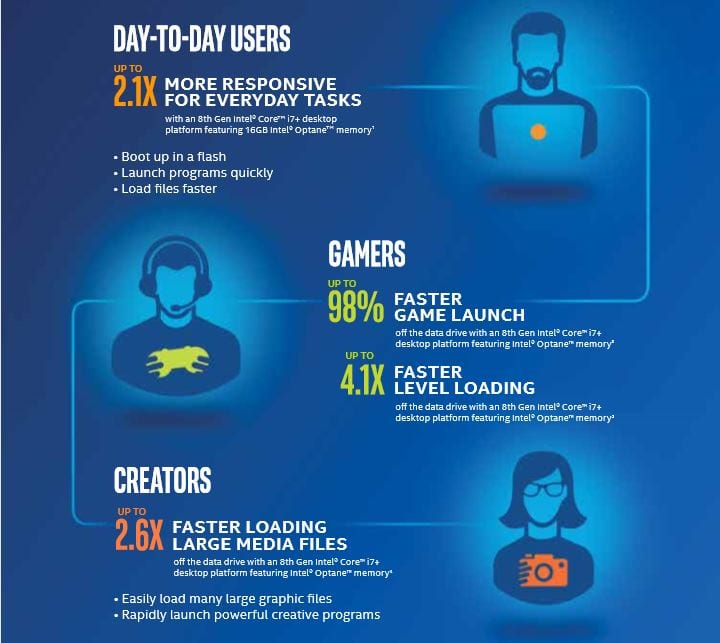
Available in 16GB or 32GB modules which simply ‘slot’ into your motherboard, Intel Optane acts as an accelerator for your system. It works with a unique combination of 3D XPoint memory media with Intel’s advanced system memory controller, interface hardware, and software IP. What does this mean? It means a smart and adaptable system accelerator that adjusts to your computing tasks — making everything you do faster, smoother, and easier. The intelligent software automatically learns your computing behaviours to accelerate frequent tasks and customise your computer experience, meaning faster searching, faster loading, and a faster system.
How does it benefit me?
Performance gains of upto 28% Faster overall system performance, upto 14x Faster hard drive access, and upto 2x faster everyday task responsiveness
Operational excellence with 3d XPoint Technology gives better endurance and faster than previous NAND Memory.
Predictability where Intel Optane learns to prioritise your files accessed regularly to have them available for you when you need them.
Fast SSD like transfer interface to rival SSD storage. Why not look at options to increase your storage capacity with HDD for lower cost than SSD.
How do I buy?
The best way to upgrade to Intel Optane is to speak to one of our specialists who can talk to you more about the benefits and explain the next steps. If however you want to buy Optane without speaking to our team you can make a purchase via the XMA store.
store.xma.co.uk
Contact us on 0115 846 4000 or use the contact form below to get in touch today
Evolution of education with Apple Augmented Reality
Apple Augmented Reality in your classroom
Mobile technology is providing new opportunities for learning in the classroom and teachers now have access to resources that can further enhance the learning experience. Alongside a teacher’s expertise in igniting curiosity and stimulating great questions, Augmented Reality (AR) can alter the learning environment and allow children to explore opportunities that weren’t previously possible.

Have you ever wondered what it was like to walk alongside dinosaurs?
What about exploring the universe, and stepping inside the space station?
Maybe you always struggled in science lessons when it came to learning about the human body?
Perhaps things would have been easier if you could have seen the human body in every detail, and see for yourself how all joints fit together.
AR in the classroom allows students to visualise what they cannot immediately see. Teachers now have the capability to bring this concept to life, and deliver some of the most inspiring lessons that pupils will ever experience.
XMA want to provide you with some inspiration for AR in the classroom, because there is a world out there ready to be explored – and it can all happen right there in the classroom!
Here are our favourite apps which can easily be incorporated into lesson plans:
Augmented Reality apps

My Very Hungry Caterpillar
Ideal for: early primary school
Requires: iOS 11.0 or later
This is a 3D interactive app, suited to early primary years. This is the perfect way to start introducing younger pupils to the world of AR and technology.
My Very Hungry Caterpillar teaches them the vital skills of responsibility; the children will need to nurture the caterpillar by feeding it and looking it after through every stage of growth until it turns into a butterfly.
This app will also teach them about evolution of growth; they will witness the caterpillar growing bigger and bigger until it turns into a beautiful butterfly.

Froggipedia
Ideal for: secondary school
Requires: iOS 11.0 or later
This apps provides new ways in bringing anatomy to life in your biology lessons, exploring intricate anatomical systems of a frog and its life cycle.
This app will help students to understand how a single celled egg can turn into a tadpole, then into a froglet and eventually to a full grown frog. By using this app, it means that there’s no need to physically dissect a frog in order to understand the full structure. This is interactive learning at its finest!
If you like this Augmented Reality app – try out ‘Brainapse’:
This is the same concept as Froggipedia, only this time with the human brain. Use this interactive app to engage your classroom in the functions of the human skull and brain. You can teach them about the different brain cells, experience how the brain communicates with the five senses and understand the timeline of the human brain evolution.

Complete Anatomy 2019
Ideal for: secondary school
Requires: iOS device
Used by 200 of the world’s top universities, this app is regarded as one of the worlds most accurate and advanced 3D anatomy apps.
This app includes a betting and dissectible human heart in 3D – there is no better way for your pupils to get up close and hands-on with the human anatomy. This app clearly explains and demonstrates pain and growth simulation and the different functions of the human body. Welcome to the future of science lessons.
Want to learn more about how to use iPad and apps in the classroom?
Get in touch with our team today
XMA named CRN Public Sector VAR of the year
In the 25th year of the CRN Channel Awards, it is with immense pride that we officially announce XMA has been named Public Sector VAR of the Year for the 2nd year running.
Ian Cunningham, Director of Sales & Marketing at XMA, who accepted the awards with the rest of the XMA Board commented “‘The level of competition this year was extremely tough and we were up against a range of industry peers who we admire and respect and who we knew would be formidable opponents, so winning against them makes it even more special.
I am beyond delighted XMA have been named CRN’s Public Sector VAR of the Year, proving that all of the hard work and determination across our company this year from top to bottom has really made a difference and is now publicly recognised. The proposals to win these awards told the story of our people and the tremendous service they have provided our customers across the year, but also it is a story of transformation and change in our company. We are being rewarded for investing in our people, evolving our systems and processes, to ultimately give our customers best in class solutions, products and services at the right time, right price and with fantastic service and relationships driven by our staff.
I’d like to extend a huge thank you not just to our staff, but to all our customers, partners and associates without whom we could not have reached such a fantastic milestone. And the good news – we are by no means finished.
Success breeds growth and XMA are growing strongly for the future.”
One team, one dream
We are tremendously proud of our achievements over the past 12 months of which much is credit to our people who continue to go the extra mile. They are critical to our success and we recognised this through the introduction of a number of training and development programmes to help them reach their full potential.
Our investment in digitally transforming our business has enabled the development and implementation of new systems, helping streamline how we work and service our customers.
Working together with one common goal, we have achieved huge growth across our Corporate, Public Sector and Ecommerce business, achieving an extended route to market and an empowered workforce.
XMA would like to extend a huge congratulations to all the finalists and winners at this year’s CRN Channel Awards. We are proud to be part of such an exciting and innovative industry and look forward to continuing to exceed expectations by delivering the best IT solutions to our customers throughout 2019.
Doing a little extra with “Little Extras”
With the unveiling of the 2018 budget last week, it was announced that the government would be investing an additional £400m into schools across England and Wales.
This additional investment was described as giving schools the extra budget for “the odd little piece of kit that they need*” – more specifically, “whiteboards and a couple of computers*”. This will be a one off capital payment direct to schools, averaging £10k per primary and £50k per secondary school.
The government have experienced a huge backlash across the country, with Geoff Barton, general secretary of the Association of School and College Leaders, saying “It is a sign of the government’s priorities that it is spending more on fixing potholes than on fixing the school funding crisis.”**
We agree that it is a small investment, and it certainly isn’t enough to help schools stretch to all the necessities they need. However, with our help we can make that additional budget go a lot further than just “a few little extras”. Our experience in doing more with less has supported schools in meeting their goals despite restricted budgets. Innovative technology solutions needn’t cost the earth. They just require careful planning, consideration and future proofing.
We pride ourselves in taking a consultative approach, by taking the time to understand your environment, challenges you currently face, and what your objectives are as a school.
Our specialist Schools team are ready to help you do a little extra with your “little extras”. Get in touch with us today so we can help your budget stretch further.
If you would like a member of our Schools team to contact you to discuss doing a little extra with “Little Extras”, please complete the fields below:
*The Guardian, 2018
** Schools Week, 2018
5 ways to meet changing IT demands
Today’s organisations must have the infrastructure in place to handle both current and emerging workloads.
Here are 5 ways that organisations can look at to meet changing demands in IT.
1. Flexible architecture
Meet today’s workload demands and easily reconfigure your system to respond to changing needs without disruption.
2. Agile IT management
Get unified control, simplified administration and intelligent automation of all system resources across 1000s of nodes and 100s of chassis with Dell EMC OpenManage Enterprise – Modular Edition.
3. Storage density for data-intensive applications
Optimize storage capacity at a granular level for specific workloads, and add solid-state flash and hard-disk drive resources as needed.
4. Responsive design
Responsive Design. Protect your investment with support for at least three future technology cycles with Multi-Generation Assurance.
5. Scaleable fabric and fast networking interconnects
Transfer even the largest data sets quickly and efficiently with support for high-speed interconnects such as PCI-e Gen 4, 25/50/100 Gigabit Ethernet and Fibre Channel over Ethernet (FCOE).
Download this FREE report and find out how the modular design of Dell EMC PowerEdge MX can help you scale, secure and simplify your IT.
We’ve got more than 30 years’ experience providing IT solutions for organisations of all sizes.



 Monitoring by Hotjar