Brexit Committee Update October 2020
Brexit Committee News Update – October 2020 Update
Following XMA’s most recent Brexit meeting, we are delighted to submit an update to our customers and suppliers regarding our plans for Brexit. Our preparations are based on the assumption that there will be no European Free Trade Agreement in place by 1 January 2021.
Potential Delays
Whilst it is widely recognised that there will be delays at Channel ports and those heading to Ireland, XMA is working with our major vendors and distributors to mitigate such delays creating new routes of delivery. Whilst this will only be partially successful, together with XMA’s increased warehouse capacity and planning with each supplier – we trust that we can avoid any material delays. Consultation with customers have shown them to be more sanguine about these hold-ups which are unlikely to affect the normal flow of business materially.
Customers with orders due around 31st December should engage with your XMA account manager asap to ensure these can be managed and prioritised to ensure they delivered prior to cut-off.
Tariffs
Our vendors are improving their ability to provide accurate codes and countries of origin. 99% of XMA products now have commodity codes stored in our product database (or the UNSPC code which is a close approximation) and have been looked up on both the UK General Tariff and the EU Common External Tariff with almost all currently displaying no tariff. Some 3D printing products are affected.
These tariffs could change in the months ahead, and we will keep customers informed of any tariff introductions as soon as we can. Any tariffs incurred will be recharged to the customer.
Warehousing
XMA has progressed its discussions and application to have a bonded warehouse within the Andover facility. These preparations are continuing and our systems are being updated. This will allow goods to remain in Europe with the confines of our UK facilities and effectively be imported into the UK at point of order by UK customers whilst allowing European customers/orders to be transacted speedily.
Ireland
XMA can supply into Ireland through our parent company and main distribution partner Westcoast and we are able to utilise Westcoast Ireland’s own distribution agreements to purchase goods direct from our main vendors and then store in Westcoast’s Ireland’s Tallaght warehouse. This may help with large projects, run-rate skus and CTO/bespoke product orders. Please contact us for further details.
International Shipping
XMA are already experts in shipping to the EU – Ireland or Mainland Europe – and are working with a number of freight forwarders to provide services for all UK customers concerned about shipping internationally. Paperwork, tariffs, VAT deferment, regulations can all be handled by XMA’s specialist partners. The EU will be implementing full border formalities on 1 Jan 2021(the UK are phasing them in over 6 months) which means that customers need to be ready.
We will be announcing our standard processes shortly allowing any customer to engage our skills and services. However, if you want a more strategic conversation on how XMA can handle all such shipments on your behalf, engage with your account manager and our team will be in touch.
Other Changes
There are a number of other changes – e.g. the new UKCA safety mark replacing the EU’s CE mark or the recognition of professional qualifications and intellectual property. These internal Westcoast Group matters are being assessed and customers are advised to examine any areas that may be affected.
Two good external sources of information providing a checklist of areas to examine are:
The British Chambers of Commerce: https://www.britishchambers.org.uk/media/get/Business Brexit Checklist.pdf
EY – 100 Days To Go Readiness Guide: https://www.ey.com/en_uk/ey-brexit/brexit-readiness-guide-for-business-with-100-days-to-go
All questions or feedback are welcome by email: approvals@xma.co.uk
Brexit Committee Update September 2020
Brexit Committee News Update – September 2020 Update
Welcome to the latest update from XMA’s Brexit team. Due to recent focus on Covid-19, XMA have not updated our Brexit page for some time. However, with the deadline for Brexit transition still due for January 2021, XMA’s Brexit Committee met this week and we can issue the current information / guidance below.
Whilst the UK has exited the European Union at the start of 2020, no real changes in trading conditions has been experienced as a result. This will not be true if the UK and the EU cannot agree a trade deal by the end of 2020. Recent reports have shown the Cabinet Office preparing for widespread disruption should such a scenario coincide with a second wave of Coronavirus in the UK.
XMA’s approach is to prepare for the worst and hope that the situation is considerably better.
Delivery Delays from Europe
Recent studies have shown that some delays at ports of exit/entry are likely. Given that the majority of goods supplied by XMA are currently imported into the EU via mainland Europe and shipped across the English Channel, such disruption is bound to have an impact. Hence XMA and our parent company Westcoast have taken or will take the following mitigating actions:
1. New increased storage – XMA’s new 346k sqft facility in Andover has been fully operational since the start of the year and has allowed increased space for XMA and our Customers; increased services (e.g. configuration, PDI, storage, bundling) and will provide reduced cost outsourcing opportunities for our OEM partners and Customers. The appropriate EORI number and TSP status are in place.
2. Short-term deals – Previous ‘false Brexits’ were covered by stocking deals with OEM partners to mitigate the immediate disruption to normal trade. XMA have already started working with Suppliers to ensure inventory planning over the change period.
3. XMA are working with freight forwarders, vendor logistics managers to ensure the smoothest possible importation through UK ports of entry. This includes correct commodity codes, country of origin information and paperwork.
4. Tariffs – Most (but not all!) IT products supplied by XMA in the last 180 days had no tariffs applicable on WTO terms or the UK Global Tariff (applicable from 1st January 2021).An accurate commodity code which allows tariff application to any goods imported is an important part of XMA’s work at present with Suppliers is encouraging them to provide a complete library of codes for every live sku. XMA are currently looking at automating a tariff look-up procedure to apply an appropriate tariff to the cost of the product if applicable. These can clearly change with little notice.
5. Other costs -VAT deferment costs, import management and transportation costs may also increase cost of goods after 1 January 2021 and will be applied systematically.
6. Finally, XMA and Westcoast are working with vendors to arrange direct delivery into the UK from the Far East (i.e. avoiding the EU altogether). Westcoast can act as a master distributor, importer or merely a 3PL provider to a wide range of suppliers.
Westcoast Exports
XMA and Westcoast now have warehousing in the UK and across Europe (inc Ireland). We are investigating the possibility of having a bonded capability in the UK for Irish goods and those for re-export to Europe. All Supplier contracts are being amended to allow for such transactions. We can manage the nuances of exporting to the EU including tariff application and shipping administration. Customers will be asked for standard information in advance of quoting whether the order is received by EDI, web or via Westcoast sales.
Ireland
The new Brexit arrangements for Ireland and Northern Ireland are well understood and we are working with our logistics provider/freight forwarder to ensure we minimise delays when delivering across the Irish Sea. There are no plans to enhance Westcoast’s current cross-stocking facility in Tallaght, Dublin.
Conclusion
Our recent Brexit Committee has reinvigorated our Brexit plans and the committee will meet every month in the run up to 31st December 2020 and will report back via ‘Brexit News’ every month. We will have updates on the progress of plans outlined above.
All questions or feedback are welcome by email: approvals@xma.co.uk
XMA named sole catalogue supplier on framework with National Procurement Service
XMA have been awarded the opportunity to provide a wide range of off-the-shelf IT products to meet a variety of requirements across the Welsh Public Sector. Named sole supplier for the supply of a Commodity IT Hardware Catalogue, this framework is the All Wales Framework Agreement for the Supply of IT products and Services (ii).
The objective of the Agreement is to create a 1-stop-shop for IT commodity products and related services, enabling IT service departments to meet all requirements from a single framework; It also aims to reflect current technology, whilst ensuring sufficient flexibility to meet technology changes in the digital and IT market.
The catalogue range will include the supply of (but not limited to):
- peripherals (i.e. printers, scanners, USB memory sticks, external hard drives, web cams, keyboards, mouse devices, speakers, digital cameras etc.);
- consumables (i.e. storage disks, cables, spares/ replacement parts, tools for repairs/ cleaning materials);
- ancillary products (digital cameras, Dictaphones, etc.); and
- low volume hardware purchases (smartphones, monitors, tablets, laptops etc.).
The full agreement consists of five lots, of which XMA have been named sole supplier on Lot 1, as well as achieving a place on Lots 2 and 5.
Lot 1: Commodity IT Hardware Catalogue
Lot 2: IT Hardware
Lot 3: Licensing and Subscriptions
Lot 4: Audio Visual
Lot 5: Solutions
Ian Cunningham, Sales & Marketing Director at XMA had this to say:
“XMA are delighted to be selected as partner to the National Procurement Service for Wales in the provision of a National IT commodity products eCatalogue. Our appointment is a reflection of the commitment we have to providing Public Sector customers in Wales with the most cost effective, broad ranging IT products, all delivered through our market leading eCommerce platform.”
The catalogue is accessible, secure and offers value for money. The catalogue is now live and you are invited to register your interest here.
How did the Covid-19 lockdown impact sustainability?
The conversation around the shift to remote working is constantly ongoing, and we have all seen first-hand the positive impacts on businesses. This includes anything from improved collaboration and productivity, through to better mental health and wellbeing. Technology has been a key enabler in supporting the move to remote working.
Technology adopted during lockdown to enable employees to work remotely has shaped not just organisations during lockdown, but strategic business planning moving forward. We have already seen announcements from large enterprise technology organisations, shifting their working model to remote, either entirely or in part.
The productivity benefits of working from home centre around the loss of the need to commute. With the average person’s work commute at 60 minutes each way, this has saved on average a staggering 10 hours per week spent mostly in the car, on the train or bus. As a result of this, the European Environment Agency’s data confirms large decreases in air pollutant concentrations, of nitrogen dioxide (NO2) concentrations, largely due to reduced traffic and other activities, especially in major cities under lockdown measures.
Reductions of around half have been seen in some locations, for example:
- In Milan, average concentrations of NO2 for the past month have been at least 24 % lower than the month prior. The average concentration during the week of 16-22 March was 21 % lower than for the same week in 2019.
- In Rome, average NO2 concentrations for the past four weeks were 26-35 % lower than for the same weeks in 2019.
- In Barcelona, average NO2 levels went down by 40 % from one week to the next. Compared with the same week in 2019, the reduction was 55 %.
- In Madrid, average NO2 levels went down by 56 % from one week to the next. Compared with the same week in 2019, the reduction was 41 %.
- In Lisbon, average NO2 levels went down by 40 % from one week to the next. Compared with the same week in 2019, the reduction was 51 %.
(European Environment Agency, 2020).
After achieving and analysing this reduction in pollution, will the Covid-19 lockdown result in real progress to tackle climate change?
Whilst addressing long-term air quality problems requires ambitious policies and forward-looking investments, the Covid-19 lockdown demonstrated the capability we must vastly reduce our emissions. When the noise of airplanes and traffic was gone, it helped us understand and have empathy for the effects of climate change on future generations. The lockdown also demonstrated to employers that employees can effectively work from anywhere with best placed technology, and in turn contribute toward a greener and more sustainable future.
Is your business set up for remote working?
XMA have been supporting businesses throughout Covid-19 to achieve efficient digital workspaces. Get in touch to discuss your Digital Workspace now.
Reference: European Environment Agency (2020). Air Pollution. Available at: https://www.eea.europa.eu/highlights/air-pollution-goes-down-as [Accessed: 24.08.2020]
So, it’s time to return to work(spaces) – are you ready?
One thing which 2020 has taught us all is the need for adaptability for businesses to survive.
Having turned your working practices upside-down, reducing the number of workers in your building and enabling employees to work from home – now you’re encouraging them to return to the office. How do you follow that up and create a plan for the future? What should that future look like?
We believe the next challenge is to create a plan which includes:
- The stability which creates opportunities for growth and development.
- Enough flexibility to allow for changes which will keep coming.
- Security and comfort from returning to some traditional working practices and spaces.
- Continuing beneficial new working practices, including enabling employees with greater responsibility and rewarding them with openness and cooperation.
But, how can we do this?
Reinforcing the Digital Workspace
Many businesses will have spent the last four, or more, months getting to grips with the opportunities enabled by their digital capability.
With the transformation made necessary by lockdown, businesses will have considered security and management as well as functionality. And, having developed these systems, ensuring they are stable enough for the future makes much more sense than going back to pre-lockdown limitations.
That’s not to say it will be easy, the changes made by many companies will have been developed in haste – ensuring these are the right changes (and changes made in the right way) will be a complicated task. As covered in a previous article, Navigating the New Normal, “Having taken those steps to change, now is the time to review, refocus and reinforce – to ensure these changes aren’t short-term fixes but strong, positive developments which will lead to future growth.”
So, while it will be necessary to review and reinforce these processes to ensure long term stability and opportunities for growth, this is the first step to creating the digital workspace your business needs going forward.
Reintroducing the Physical Workspace
Returning to a subject we explored in Navigating the New Normal, the question is ‘How do we use our offices moving forward?’
At the most basic level, some of our issues can be managed through signage and provision of sanitising stations. However, to ensure the confidence of your people and efficiency within your space, it may be necessary to implement smarter measures – maybe using technology to manage the density of occupancy or monitor routes used by employees to avoid congestion.
In the future, it will be important to use your understanding of your employees and the technology you have available to ensure a safe, smart office environment.
Allowing staff to book desks for working is the first step; however, this needs to include an understanding of the other processes surrounding this desk use. Of course, nearby desks (within an agreed radius) must be kept free and, once used, a desk must be appropriately cleaned before being made available to anyone else.
As well as looking at how smart workspaces are allocated and managed, you might promote the use of smart meeting areas, to enable collaboration regardless of location, and adopt smart document solutions – with contactless printing or digital signatures. These changes, prompted by our current situation, will likely remain, so need to be focused on your goals of increasing productivity and engagement for the long term.
Understanding the Hybrid Workspace
So, how do we ensure the changes we’re making are building systems which are fit for the future? This is something we’ve talked about before, in How Agile Working is Changing our Future.
We’ve already looked at the need to build intelligence into processes to ensure ease of use and efficiency for the workforce as a whole. Now is the time to be considering the possibilities as well as the precautions, to learn from our experiences and build stronger and more flexible systems which benefit everyone in the business. This will be particularly true as we develop systems enabling personalised digital workspaces – again improving efficiency and engagement.
In terms of our digital workspace, providing systems which are available wherever your employees are, tools which enable easy and efficient management and allow for easy communication – these are the most basic standards we have come to expect. Employee performance and engagement is improved by allowing individuals to have some element of choice over where they work.
Physical spaces should also work as well for our teams as they do for our customers and managers. One benefit to the business will come from providing the best workspace for employee engagement and efficiency, and this should be the aim when returning to work. There are additional benefits, of course, in the efficiencies now possible within these physical spaces.
As you look to provide the right environment for your customers and staff, how will you ensure you’re building systems and processes which are helping build your business?
If you need help to understand what’s possible – how you can build a hybrid agile workspace with room to grow and flourish – get in touch. It would be great to talk.
Written by Terry Chana – Director of Workspace Solutions @ XMA
Windows 10 out of 10
I hope everyone is safe and well during lockdown and people are still finding fun ways to stay active and social. Like many people I’ve been having regular quizzes online with friends, often ending up in ‘JD Wetherzooms’ for a few drinks. I recently hosted a Britain’s Got Talent spoof on Teams and people were impressed at how some of the features were in the free version of Teams and how well it integrated with Windows 10 features!
I’ve been a windows 10 user for so long I’ve almost forgotten what Windows 7 looks like for those feeling nostalgic here you go..
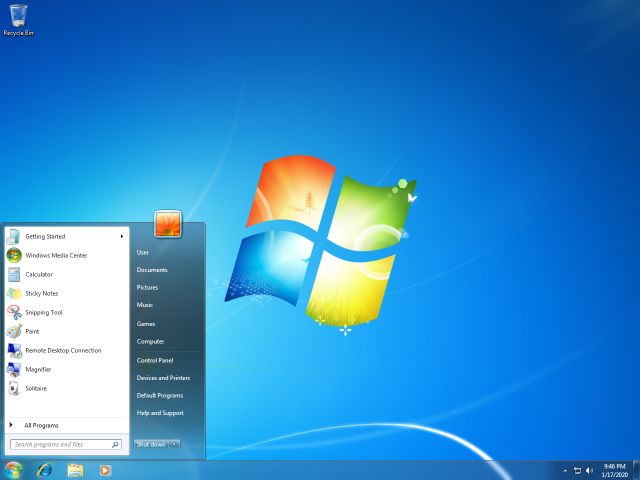
With the evergreen Window 10 OS features are rolled out so regularly that often they can be missed! I’ve handpicked some of the top ways I have been more collaborative and productive during current COVID remote working!
Let us begin at the start…
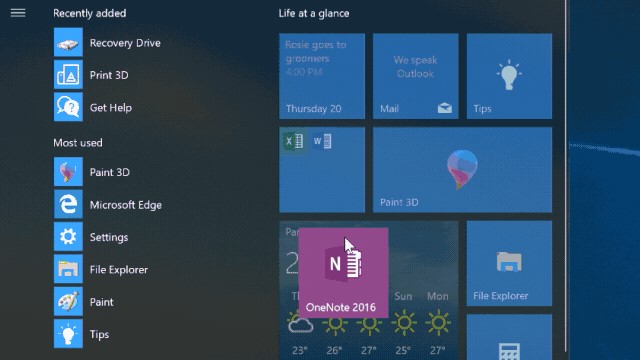
Just like organising your apps on your phone, or bookmarking your favourites within your internet browser, by customising you Start Menu you will have you go to applications and documents just one click away!
Pin apps to the Start menu for quick access to what’s important by selecting Start> press and hold (or right-click) the app you want to pin > Pin to Start.
Treat your start menu to a spring clean by unpinning the apps you don’t need to make it less cluttered!
To get really organised you can actually create your own Start Menu folders.
Drag one tile on top of another to make a folder, then drag more tiles into it. To open the folder, just select it.
Share the workload!
Most people are aware of OneDrive and being able to save and share documents from their own cloud hosted folders. Once a document is in your OneDrive if you want to share the document for joint working you can simply do that via right-clicking the file and selecting More OneDrive Sharing Options.
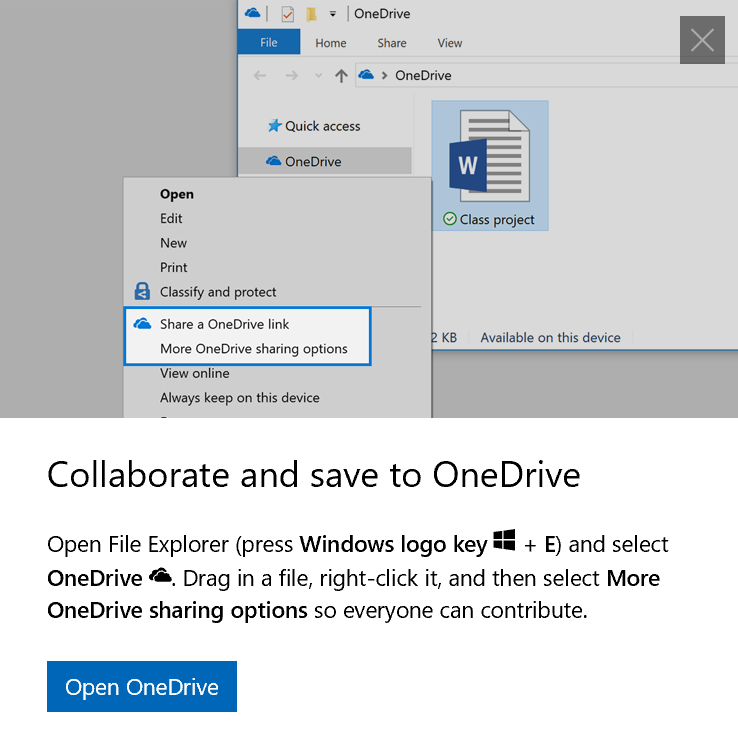
To edit this document in real time with colleagues, once opening the document you can select Share, enter the email address of the people to share with and select Send. Now the file is shared with everyone on your list.
Whilst editing each user will be assigned a coloured flag to illustrate where they are in the document. This saves time emailing around the document and loosing track of versions, and allows maximum productivity when on a team call.
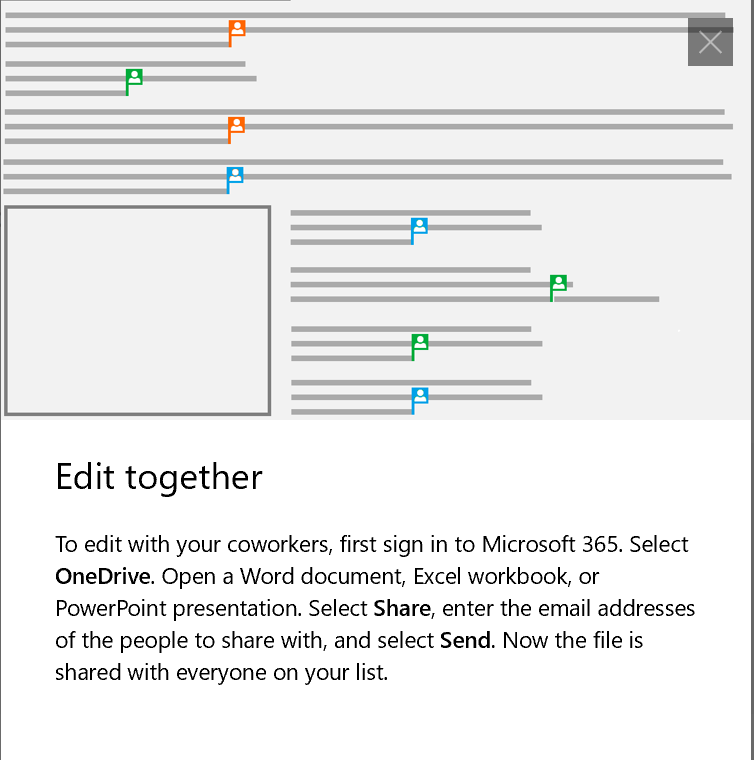
If you are not on voice call, you can still chat with colleague within the shared document. When editing a shared Microsoft Word document if you select the picture of someone who is editing at the shame time, you can hit the Chat.
Many screens make light work…
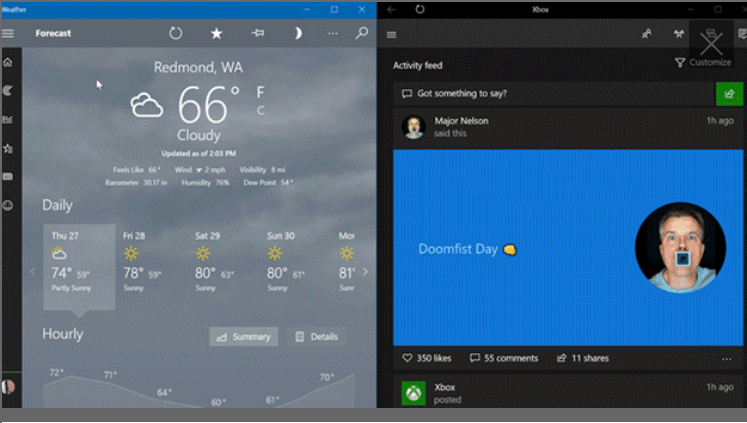
You may have had a dual screen set up in your office or an external monitor that would allow you to view multiple applications at the same time. A prime example for me is switching between a Excel spreadsheet price file and XMA quoting system. Windows 10 provide a handy way of allowing you to snap applications side by side. If you select any open window, then drag and bounce it against the side of your screen. All other windows you have open will appear on the opposite side. Select a window to have it fill the open space.
If your finding yourself spending more time looking at your phone screen as well, you can actually use the phone directly from your Windows 10 machine. The Your Phone App allows you to link your android phone to your device to respond to text, share photos, make calls and more. iPhone users can also use the all-in-one Office app to stay productive wherever you are. Ideal for when you want to get some fresh air and sit in the garden!
Saving your bacon!
Never underestimate the pain of losing documents and folders if your PC breaks when your darling daughter accidentally knocks a whole glass of orange juice over your keyboard!
Thankfully like me, you can automatically back up document, picture and desktop folders to OneDrive so they are protected whatever happens to your PC!
On the right side of the taskbar, select OneDrive > More > Setting and on the AutoSave tab, select Update Folders and specify which folders you’d like to keep automatically synced.
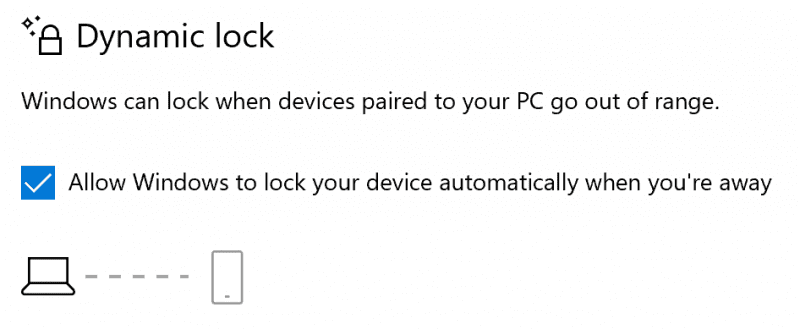
To prevent the offspring from deleting my work when I’ve left my laptop unattended whilst getting a cuppa I’ve also setup Automatic locking on my PC.
You can use Dynamic Lock setting to lock your PC once a paired Bluetooth device (possibly your headset or phone) leaves the proximity around your PC.
Under the Start menu go to Settings > Accounts > Sign-in options. Select the check box under Dynamic lock, and then take your device and walk away, safe in the knowledge that you PC screen is locked!
Oooo work-friends…
Keep your favourite people nearby… by using the People app you can keep important contacts right on your taskbar, so they’re always within reach when you want to chat.
People pulls in contact info from apps like Teams and Mail. Once you’ve connected those apps, use People to find your favourites and pin them to the taskbar for easy access.
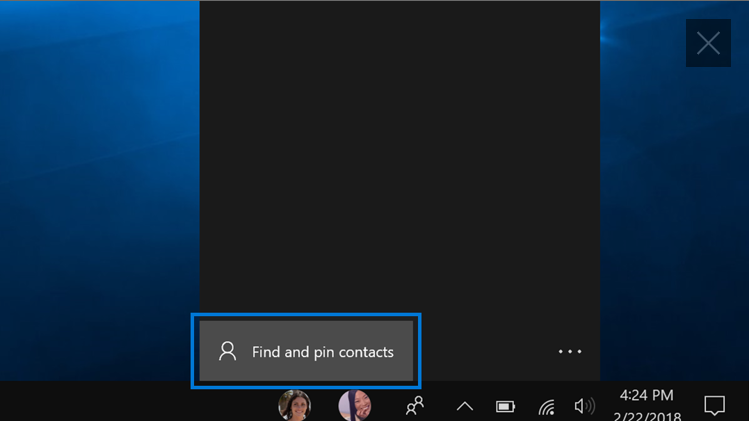
Pin a contact to the taskbar
Easily get in touch with your favourite contacts. Select People > Find and pin contacts, then pick who you want to pin! Obviously, our marketing team are pinned in mine! ?
I hope that you’ve found the above features interesting and useful and honestly this is just the scratching the surface [no pun intended] of ways that windows 10 can help. For more tips and tricks please check out Microsoft’s Windows 10 page here
On the 5th of June I am running a webinar with Dan Boyles from Microsoft to discuss some of our favourite features in Windows 10 and how they are making our remote working lives easier. You can view the webinar here
In the meantime if you have any questions on Microsoft licensing, products or feature please drop me an email on James.Thorogood@xma.co.uk
Stay safe. Stay connected.
All the best,
James
Cloud Physics: An analytics-driven approach to managing infrastructure
A New Approach
In today’s world of software-defined datacenters, infrastructure is increasingly complex and change is constant. The potential for change-related risk to applications is greater than ever before. In spite of the abundance of tools available, IT administrators lack the ability – and time – to study all the known or unknown configuration issues in their vSphere infrastructure. They struggle to understand whether changes – intended or accidental – result in smoldering performance and availability issues waiting to ignite.
Further, when things go wrong, there’s an inability to replay the changes over time to correlate events or trends that caused the current problem. This creates a significant drag on administrator effectiveness especially as they are thrown into firefighting mode to minimize the impact of unexpected application disruption and related costs.
The goal of CloudPhysics is to provide organisations with an analytics-driven approach to managing infrastructure that enables administrators to preempt emerging hazards and gives them the confidence to act boldly to reduce risk and waste in their vSphere environments.
To learn more , please fill in your details below to receive a free copy of the CloudPhysics whitepaper.
Everything you need to know about dHCI…
XMA’s Infrastructure Solutions Team are seeing a growing interest in dHCI from HPE.
XMA Solutions Director for Infrastructure – Jen Norman – and her team of Datacentre Architects take a closer look..
We’ve been designing and installing Hyperconverged Infrastructure solutions for some time now, and between Myself and my Datacentre team we have over (*cough) 115 years (*ahem) engineering experience between us. So when HPE came to us with a disaggregated hyperconverged infrastructure solution last year, apart from repeating the name several times over to ourselves, we got onboard and got involved. Now we are privileged to have completed our first dHCI live production solution deployments earlier this year.
What could you be facing?
So maybe your VMware system is running out of storage capacity, your servers are dated and you can’t upgrade to run the latest versions.
Ok. Well you’ve done some research and investigation. You want a hyperconverged replacement where you can run concurrent workloads, and like the idea of being able to scale out storage or compute separately. BUT it would be great if you could get this delivered, supported and managed as a single product.
What else might you need?
Well as standard, you want a storage system that has options for encryption, compression and deduplication, application consistent snapshots and advanced replication (ether synchronous or asynchronous) with near all-flash speed and sub-ms latency for always-on apps. That’s a given.
Definitely VMware clusters running on the latest compatible server hardware and block level storage.
A complete turnkey solution? One that is monitored from the application to the storage, proactive alerting and with the ability to predict and prevent infrastructure problems before they happen.
Nothing less than a system designed for 99.9999% availability – no single point of failure, hardware redundancies with the ability to tolerate 3 simultaneous drive failures!
And you’re pretty sure that Procurement will want the choice on finance options – including future proofing, cloud like financing, with integrated support.
Then you definitely need a HPE disaggregated hyperconverged solution (dHCI)
And you are not alone. Since its inception in 2019 we have seen successful installations in Local Government and Education, with interest and opportunities growing in the Corporate, Commercial Enterprise and Healthcare sectors.
It’s a winning combination
You take the power and performance of the HPE Nimble Storage array, with its self-managing flash storage.
Add industry-leading HPE ProLiant Servers, include HPE storage switches, and deploy VMware vSphere.
Then this is all preconfigured as a turnkey solution!
Then automate with full-stack intelligence and policy-based automation for VM-centric management.
But here’s the best bit……
Add the power of HPE InfoSight over all this, and you have full-stack predictive analytics and support automation working for you that predicts and prevents issues. Infosight auto-routes any complex issue directly to L3 HPE Nimble support.
HPE have streamlined their support portfolio to offer four service levels that are easier to understand, easier to align to business needs which gives you visibility into IT assets and support status from anywhere.
You can flexibility and independently grow compute and/or storage – adding new dHCI compatible storage and/or servers when required – for scale-out upgrades that are non-disruptive and transparent to applications.
Eliminate over provisioning and add only the resources when needed. The Timeless Storage means no worries today or tomorrow with all-inclusive software licensing, flat support pricing, no forklift upgrades, and an option to receive a free faster controller upgrade after three years with Timeless Storage.
And, if you’re reading this thinking ‘well this sounds great but I’ve still got Gen9 (or 10) Proliant servers that are in warranty and I don’t want to replace them yet’.. Well HPE read your mind, (just kidding, they leave that to your home speaker system and asked Alexa what you thought), and have designed the solution so you can use the existing compute you already have in place, add a Nimble array and the dHCI software allowing you to convert everything in to a dHCI solution!
Is this Complex?
HPE Nimble storage arrays can be installed and be up and running in half a day requiring no external tools or software – we have completed installations where the HPE Nimble arrays that have been physically installed, configured, integrated and have test VMs running within hours ready for User Acceptance Testing (UAT). They can be All-Flash (AF) or Adaptive Flash (HF) for mixed, mainstream workloads, where cost-efficient flash performance is important. It is a Secondary Flash array for backup and DR while allowing you to put your backup data to work.
For the compute you have the HPE ProLiant Gen10 DL360 a performance driven dense server or DL380 for performance and expandability. These servers deliver security, agility and flexibility without compromise – with the knowledge that you can confidently deploy for virtualisation.
These are completed with a choice of Ethernet HPE storage switches to meet your budget and installation size.
Root Cause…. Could it be the network? A server fault or a storage fault?
Once installed HPE InfoSight can help you stop spending days searching for a root cause deep in your hybrid environment. Every second, HPE InfoSight collects and analyses data from more than 100,000 systems worldwide, and uses that intelligence to make every system smarter and more self-sufficient. The result? HPE InfoSight predicts and automatically resolves 86% of customer issues.
Where to go for more information:
HPE dHCI
Why choose XMA?
We are an HPE Platinum partner and have trained and Certified HPE sales and engineers with Master Accredited Solutions Experts (top-level credential validates technical skills) with experience in building and sizing advanced enterprise systems. Continually staying up to date with the latest technology updates, strategies and programs. One of our core values is “customer focus”. We put our customers at the heart of everything we do. We don’t just provide technology we provide solutions.
Written by Jennifer Norman, Solutions Director for Infrastructure
Microsoft Licenses – April Update
On 1 April, Microsoft launched a new entry-level package, calling it Microsoft 365 F1 (F for Frontline). It bundles together the cloud-based productivity tools you need to be efficient and effective. To make way for this brand-new bundle, the product formerly known as Microsoft 365 F1 has been renamed Microsoft 365 F3. Office 365 F1 becomes Office 365 F3.
View the First Line Worker Comparison Chart along with the full April updates here
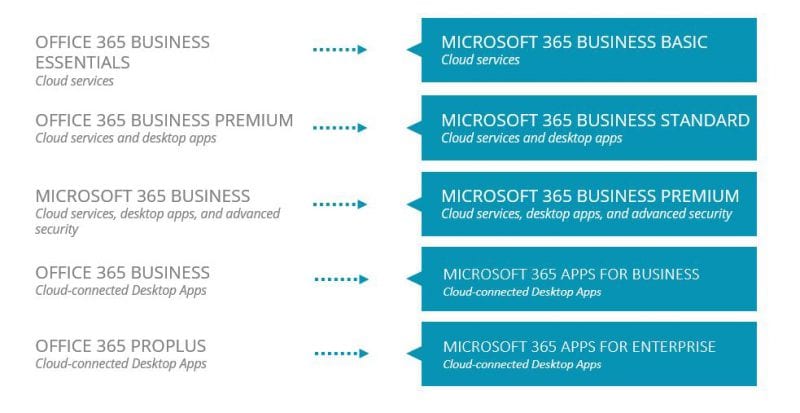
Some licensing products are being rebranded. The plan is to phase out the name ‘Office’ over time and migrate everything to ‘Microsoft’. From 21 April this starting with the following business products:
If you have any questions or need any help with Microsoft Licensing please contact our CSP Business Manager, James.Thorogood@xma.co.uk, or alternatively speak with your dedicated account manager or call our sales team on 0115 846 4000
Say ”Goodbye” to Windows Server 2008
Say “hello” to a secure, simple, cloud-ready future
Modernise with the latest versions of Windows Server on HPE Gen10 and benefit from improved security, greater efficiency, and access to the cloud.
Windows Server 2008 went end-of-support January 14th, 2020.
Windows Server 2008 is an operating system produced by Microsoft. In the past, if you had a problem with your server, either you, your IT partner, or your software vendor had the ability to reach out to Microsoft to get:
- Technical support
- Help troubleshooting issues
- Patches or updates
Microsoft will no longer provide this support.
If your business runs software on the Windows Server 2008 operating system, neither you, nor your IT vendors, IT service providers, or custom/third-party software application developers will be able to contact Microsoft for help even if the issue originates in Windows Server 2008.
Upgrade to Windows Server 2019 today with Windows Server on HPE Gen10
The Benefits
In addition to cybercrime protection, new systems are significantly more efficient. With Windows Server 2008, virtual machines consume so much CPU and memory that only a small number of VMs can run on each physical server. With modern Windows Server technology, it’s possible to run hundreds or thousands of containers on each server. Fewer servers = lower costs and less complexity.
Old servers play a large role in rising IT costs because they drive up the #1 cost issue for most data centers: software license and support fees. Moving to the latest HPE Gen10 servers will help control this significant expense. Since most software is licensed according to the number of processor cores:
faster servers = fewer cores = lower software license costs.
Download our InfoGraphic to find out more
Migrate straight to the cloud?
Microsoft will offer extended security updates for customers who migrate their legacy applications to the Azure cloud and run them on virtual machines. Is that the best solution for you?
Migrating your entire legacy environment to run in virtual machines in the public cloud still leaves you with outdated applications on an OS that loses support as soon as you leave Azure. And VMs in the cloud require extensive ongoing management for many of the features that are automated in cloud-based applications, including configuration sizing, securing, patching, and maintaining. A migration of Windows Server 2008 to VMs in the cloud is a short-term fix that will need to be resolved for your business to truly benefit and move forward.
The better alternative
When a legacy Windows Server 2008 environment is modernised on HPE Gen10 Servers with a current version of Windows Server, you get the added security against cybercrime, the efficiency of cost-saving technologies, and the benefits of a hybrid cloud platform. Exciting HPE products like Synergy, SimpliVity, and the Apollo System for AI and Deep Learning provide powerful tools so that you can successfully address the IT challenges that were never imagined back in 2008. It’s time to move forward.
Contact us today to find out more about which solution is best for your business



 Monitoring by Hotjar