Toshiba’s 2-in-1 for your organisation

In recent years we have been seeing a rise in the use of 2-in-1 laptops or convertible notebooks, often referred to as detachable devices. There are many reasons for this growth, with the ‘detachable tablets’ being seen a fresh approach to the market and a more flexible and versatile device for working environments, as well as the added increase in the need for businesses and students to go portable.
Many buyers will be considering which device is best suited and why. Here we look at the newly launched Toshiba Portégé X30T which offers strong competition to this market.

The Portégé X30T uses a full-size port layout in a tablet-style freedom. Featuring Intel 8th Generation processors and ultra-fast SSD storage delivers the unthrottled performance you’d expect, making light work of heavy tasks. With proven physical security and durability meets military standards MIL STD 810G and has been tested to pass TUV HALT standards which simulate three years’ usage.
Other features include:
- Up to 15.5hr battery life
- Optional LTE to keep you online
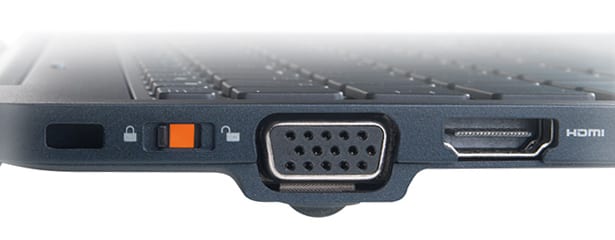
- Full size port layout
- Bio-metric multi-factor authentication for added security
- Military Grade robustness
High performance creative tablet
Also able to be used as a high performance tablet with a 13.3″ touchscreen and kickstand, you can boost your creativity with best in class hand writing or drawing via the optional Toshiba Universal Stylus Pen with Wacom AES Pen Technology optimised for Windows Ink.
The Standard of Toshiba Portégé X30T
What is very interesting about the Toshiba Portégé X30T is that you do not need to purchase a keyboard dock, as it comes bundled as standard, still with a battery life of an astonishing 15.5 hours.
There are optional accessories, to enhance your mobile performance:
- Sleeve protector
- Travel keyboard
- Ultra slim keyed cable lock
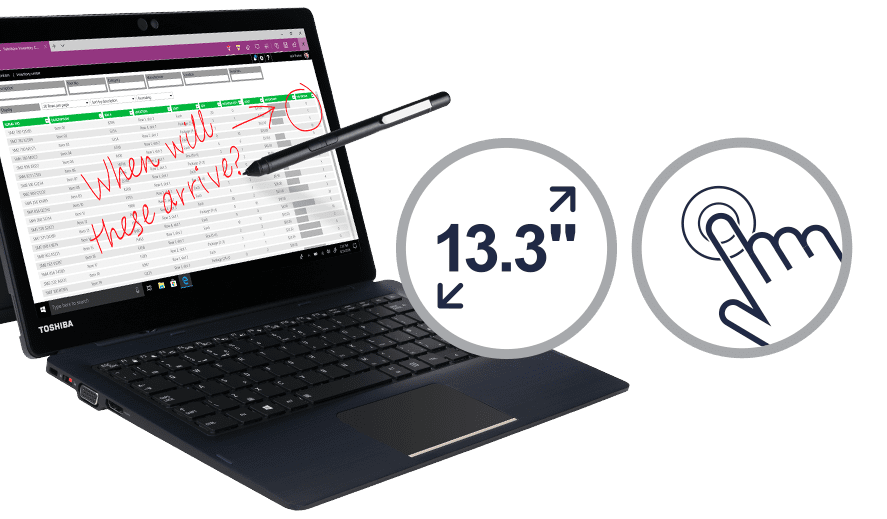
The Portégé X30T is available to buy by speaking to our team
or you can buy online by visiting the XMA store
Dell EMC Modern Server Infrastructure can make a massive difference
Do you wonder how making the move to implement a modern Server Infrastructure can dramatically accelerate IT transformation?
In today’s digital economy, faster IT typically results in a competitive business advantage. A modern IT infrastructure is critical if you want to stay ahead of the game, because it comes with higher levels of process automation—which, in turn, drives increased speed, agility, scalability, reliability and cost-savings.
Implementing a modernised infrastructure is one of the fundamental steps in the journey towards transforming IT. Dell EMC offer Server Solutions designed to deliver IT transformation without compromise.
What makes for a modern Server Environment?
Essentially, it’s an infrastructure that focuses on operational cost-efficiency and puts automation at the forefront, this is achieved technology that can offer:
- Scalable business architecture
- Intelligent automation
- Integrated security
Implementing a smart server refresh to the latest Dell EMC technology is a decision that’s likely to pay for itself several times over in terms of operational improvements and cost efficiencies and IT maturity.
Additionally to this, organisations that operate modern server environments can see many tangible benefits:
- Faster application deployments that are more responsive to the rest of the business.
- Ability to move staff away from routine management to focus on more strategic IT projects.
- Operate compute environments they believe are as good as or better than public cloud services in terms of cost, agility, scalability and security.
If you want to discuss the benefits of Dell EMC Server Solutions, contact us on 0115 846 4000.
If you’d like to find out more about refreshing your Server Technology, use the contact form below to get in touch today.
Brexit Committee Update December 2018
December 2018 update from XMA Brexit Committee.
The latest XMA Brexit Committee meeting took place after the recent vote of ‘confidence’ in the Prime Minister. It is the Committee’s opinion that the likelihood of a ‘no deal’ Brexit increased and as such we are looking to firm up our position in relevant areas.
XMA’s objective is to minimise the effects of Brexit on trading and we are ensuring it does all it can to mitigate the impact of ‘no deal’. The agility and flexibility that XMA is renowned for will stand our business in good stead to help customers and vendors alike.
The British Chamber of Commerce has produced a thorough Brexit Checklist and we have found this a constructive way of enabling us to review all the no deal issues that may arise. The checklist can be found at https://www.britishchambers.org.uk/page/brexit/business-brexit-checklist and we recommend readers of this statement use it for their own preparedness. The checklist provides plenty of links to other official guidance. Your local Chamber of Commerce should also be of help for specific queries.
Workforce
XMA is taking steps to support its EU27 citizen employees – particularly those applying for the EU Settlement Scheme. This scheme is due to be open between March 2019 and 30 June 2021. Further information is available on the Government website, including an employer toolkit.
The future staffing of the business may be affected by UK immigration controls and travel between XMA established countries may also be affected. XMA will look to assist staff with their visa applications (if necessary).
Cross-Border Trade
XMA is ready with customs procedures and has expertise within the business to process imports and exports from/to the EU (as we do with non-EU countries today).
We are still investigating whether any goods are affected by tariffs (controlled goods), but it appears at this time that all IT and Consumer Electronics goods do not attract WTO tariffs. Appreciating that this is not guaranteed to continue, XMA will be training staff to ensure customs procedures can be met.
Potential delays
This is the Brexit Committee’s biggest concern given the general indication is that the British ports and customs processes are not yet adequately prepared for a no deal Brexit. A small delay will potentially cause huge delays to goods deliveries in both directions and non-perishable goods will not be prioritised. As a result, we are looking to take the following steps:
- increase the size of XMA’s available storage capacity by working closely with our Tier 1 supply chain partners.
- agree with vendors stocking models that will mitigate some aspects of the delays.
- ensure that XMA has local configuration facilities in place to mitigate the, at times frustrating, channel tendency to configure a unique sku from the vendor (generally manufactured within the EU at present).
- seeking legal advice to assess whether a no deal Brexit can be considered ‘Force Majeure’ when it comes to late delivery penalties/service level agreements. Clearly any delays will be out of XMA’s control however, if necessary, XMA is standing by to amend any contract where time of delivery is the essence.
- working closely with our parent company (Westcoast) to investigate stocking capability within Westcoast’s Irish facility, where goods will be held as necessary to ensure a next day service to Irish customers continues. Westcoast’s courier to Ireland will increase its ability to ship via Northern Ireland where necessary.
Tariffs
XMA is reviewing the HS (international classification system) codes for all products we sell/distribute. It appears that there are no tariffs on most goods at present, although with current trade barriers being erected between the USA and China, continued vigilance will be required.
All import or export tariffs will be passed on through price increases from vendors or increases from XMA. This is in line with XMA’s existing terms and conditions of sale.
Rules of Origin
We understand that all XMA manufacturer suppliers are responsible for determining the source of their goods, yet we are writing to all to verify they are able to produce evidence upon request. As the manufacturer of Viglen products, XMA can evidence the source of all of our goods.
Other Customs points
XMA is not currently a member of an HMRC trusted trader scheme. We are assessing whether this would be advantageous, yet XMA is already fully conversant with Incoterms and Intrastat reporting.
VAT
Our parent company (Westcoast) has all necessary country specific VAT registrations to support customer purchases based all over the EU. Their in-house VAT experts are assessing any import VAT issues, yet most imports fall outside the thresholds.
Currency
XMA has a currency fluctuation policy and significant movements are passed on to the customer. We anticipate significant fluctuation in case of no deal, leading to significant and immediate price rises from vendors. XMA will ensure such rises are well communicated with as much notice as the vendor allows.
Intellectual Property
XMA hold UK Trademarks.
Contracts
A full review of customer contracts where EU law/EU geography is specified is underway.
EU Regulations
Notwithstanding EU regulations will cease to have direct effect on the UK once it leaves the EU, the UK has taken steps already to transpose most EU regulations into English law in any event (e.g. personal data or waste packaging). We therefore do not anticipate a material effect on the UK’s ability to comply with matters such as safety or transfer of personal data post departure from the EU.
Competition and State Aid
Changes made to competition regulation are unlikely to affect XMA or its business practices in the short term.
For any questions or queries contact our XMA Brexit committee at approvals@xma.co.uk
XMA named CRN Public Sector VAR of the year
In the 25th year of the CRN Channel Awards, it is with immense pride that we officially announce XMA has been named Public Sector VAR of the Year for the 2nd year running.
Ian Cunningham, Director of Sales & Marketing at XMA, who accepted the awards with the rest of the XMA Board commented “‘The level of competition this year was extremely tough and we were up against a range of industry peers who we admire and respect and who we knew would be formidable opponents, so winning against them makes it even more special.
I am beyond delighted XMA have been named CRN’s Public Sector VAR of the Year, proving that all of the hard work and determination across our company this year from top to bottom has really made a difference and is now publicly recognised. The proposals to win these awards told the story of our people and the tremendous service they have provided our customers across the year, but also it is a story of transformation and change in our company. We are being rewarded for investing in our people, evolving our systems and processes, to ultimately give our customers best in class solutions, products and services at the right time, right price and with fantastic service and relationships driven by our staff.
I’d like to extend a huge thank you not just to our staff, but to all our customers, partners and associates without whom we could not have reached such a fantastic milestone. And the good news – we are by no means finished.
Success breeds growth and XMA are growing strongly for the future.”
One team, one dream
We are tremendously proud of our achievements over the past 12 months of which much is credit to our people who continue to go the extra mile. They are critical to our success and we recognised this through the introduction of a number of training and development programmes to help them reach their full potential.
Our investment in digitally transforming our business has enabled the development and implementation of new systems, helping streamline how we work and service our customers.
Working together with one common goal, we have achieved huge growth across our Corporate, Public Sector and Ecommerce business, achieving an extended route to market and an empowered workforce.
XMA would like to extend a huge congratulations to all the finalists and winners at this year’s CRN Channel Awards. We are proud to be part of such an exciting and innovative industry and look forward to continuing to exceed expectations by delivering the best IT solutions to our customers throughout 2019.
5 ways to meet changing IT demands
Today’s organisations must have the infrastructure in place to handle both current and emerging workloads.
Here are 5 ways that organisations can look at to meet changing demands in IT.
1. Flexible architecture
Meet today’s workload demands and easily reconfigure your system to respond to changing needs without disruption.
2. Agile IT management
Get unified control, simplified administration and intelligent automation of all system resources across 1000s of nodes and 100s of chassis with Dell EMC OpenManage Enterprise – Modular Edition.
3. Storage density for data-intensive applications
Optimize storage capacity at a granular level for specific workloads, and add solid-state flash and hard-disk drive resources as needed.
4. Responsive design
Responsive Design. Protect your investment with support for at least three future technology cycles with Multi-Generation Assurance.
5. Scaleable fabric and fast networking interconnects
Transfer even the largest data sets quickly and efficiently with support for high-speed interconnects such as PCI-e Gen 4, 25/50/100 Gigabit Ethernet and Fibre Channel over Ethernet (FCOE).
Download this FREE report and find out how the modular design of Dell EMC PowerEdge MX can help you scale, secure and simplify your IT.
We’ve got more than 30 years’ experience providing IT solutions for organisations of all sizes.
Choosing the Right Technology: IT procurement Tips for SMEs
A well-considered investment in new technology is an investment in your business’ long-term future.
It’s an exciting time for any organisation. The right tech, whether hardware or software, can transform a firm’s growth potential, helping your business take the next step in its success story. However, it can also be a stressful time as smaller firms don’t necessarily have the kind of in-house IT procurement expertise needed to make important tech investment decisions with confidence.
With so many alternatives on offer, working out the best IT solution for your business isn’t always straightforward – and the implications of getting it wrong can be costly. Here are our thoughts on some of the steps that smart SMEs are taking in order to make sure their technology investment decisions have the desired impact
1. Start at the end
Just like any kind of capital expenditure, the intended benefits of the investment should be well understood before the procurement process starts. The primary reason that SMEs buy new technology is the need to improve performance or optimise a business process, so look at the processes in your business and ask, what should or could be done better, more quickly or more efficiently?
Often the best people to identify these pain points are your workforce. A staff survey can be an effective way to work out how much time is being spent on different activities, which can help to identify and prioritise inefficiencies.
Then you can ask yourself, could technology help to address this?
Are staff spending hours on end in team meetings, for example? Perhaps they need a more effective tool for collaborating, like an Instant Messaging system or a project management app?
Are they taking an age to locate customer files in filing cabinets? In that case, a scanning solution could make that process far more efficient and productive, freeing them up to make an impact elsewhere in the business. A business should only invest once it has clearly identified the processes it needs to change and how new technology can effect that change.
2. Consult and report
So, now you know what you want your new technology to be able to accomplish, it’s essential to consult all the staff who will ultimately be using it about the functions they need.
These are not vague ambitions, but clear objectives that tie in to the needs of the business.
You can also ask them about any other desirable features that would help them do their jobs better.
All these factors should also be ranked according to importance, as budget limitations may not allow you to tick every box, so prioritise the most critical.Some of the issues you will want to consider include usability, security, scalability, functionality, reliability, quality, the provision of support and compatibility with existing systems.
Once your analysis is complete, create a written report that lays out exactly what the investment is designed to achieve, that can be shared with, and signed off by everyone that will be affected. This document will prove invaluable when it comes to navigating through the huge variety of potential solutions that are available.
3. A systematic solution
The huge amount of technology aimed at SMEs can be seen as both a blessing and a curse.
On one hand, it makes it more likely that there is a product out there that precisely suits your circumstances, on the other, finding it could be a real challenge.
Now you have your comprehensive list of requirements, one option is to create a spreadsheet comparing them against a selection of potential solutions.
You can then start narrowing down the list by working out which option fulfils the most criteria to find the best solution.
Of course, cost will be a factor too, but look beyond the initial investment to consider the long-term value, such as the print cost per page provided by a new printer.
If this still seems a little overwhelming, then teaming up with a technology supplier could be the way forward.
4. A helping hand
Don’t think of us just as a supplier with a sharp salesman who’s trying to sell you the most expensive solution they can, regardless of its suitability.
We function more like a trusted procurement partner, who can support you through the decision-making process, installation and bedding in of any new technology.
We want to build a long-term relationship with your business, so it’s in our interest to ensure we provide the right long-term solution for you.
We work hard to understand what businesses need from their technology and develop integrated solutions that enable customers to achieve their goals. And work with you to understand the challenges you face, then introduce services and products that will help you to work smarter and stay ahead of your rivals.
5. Teething troubles and training
Most IT professionals will tell you that, however well planned an installation is, some degree of teething troubles are inevitable.
For small businesses, any period of downtime can have a huge impact, so ready access to technical support and training is essential, especially in the first few months.
Again, we can provide some added value by managing the installation process.
Training ensures that your staff are getting all they can out of a new technology, using it to its full potential and generating the maximum positive impact on productivity, as well as delivering a better Return On Investment (ROI). We can offer training, so you have plenty of options to get the right solution for your business.
Learn how organisations from various sectors are deploying technology to their advantage by visiting our Success in Action page.
Why Composable Infrastructure matters to your business

HPE Synergy is the world’s first truly Composable Infrastructure and today’s new hybrid IT engine. Synergy enables you to maintain the structure and security of traditional IT, whilst still having flexibility and speed for new applications.

1. Cloud-like speed
Composable Infrastructure enables DevOps teams to spin up new services in minutes to get new experiences into customers’ hands faster, delivering cloud-like speed from your own secure datacentre. |

2. Single platform
Run traditional applications and cloud-native apps from a single platform that supports everything from bare-metal deployment to virtual machines and containers. This allows IT to align behind a single platform to reduce datacentre complexity and cost. |

3. Software-defined
Intelligent software recognises and automatically integrates compute, storage, and fabric into resource pools that can be aggregated and disaggregated to meet the needs of any application. Template-driven provisioning helps ensure policy compliance and reduces risk exposure. |

4. Operational efficiency
Remove the need to stand up separate siloed environments for different applications. Automated provisioning via templates and a unified API enables application infrastructure provisioning in minutes instead of days, bringing cloud-giant efficiency to your datacentre. |

5. Continuous development
Developers can request exactly the amount of compute, storage, and networking fabric their applications need, directly from code. The unified API aggregates physical resources just like virtual and public-cloud resources, giving developers true infrastructure-as-code capabilities. |

6. Fluid IT
Accelerate application development by giving DevOps teams more control over their environments. Fluid resource pools allow developers to execute non-disruptive changes and to continuously refine applications to meet customer needs as they arise. |

7. IT economics
Template-driven provisioning and non-disruptive updates mean IT spends less time maintaining infrastructure, reducing labour costs. Fluid pools of resources that can be aggregated on demand increase utilisation and reduce over-provisioning and stranded capacity. |

8. Competitive advantages
Bridging the performance and control of dedicated infrastructure with the flexibility of the cloud allows lines-of-business to accelerate delivery of new customer experiences and revenue opportunities to stay ahead of the competition. |

9. Future-proofed datacentre
Be ready for whatever the future might bring with a scalable and extendable infrastructure and robust partner ecosystem that provides a firm foundation for today’s hybrid IT and the capacity and flexibility to take future innovations in stride. |

10. Seamless evolution
Starting with as little as a half-rack of gear, Composable Infrastructure can be deployed easily and incrementally, side-by-side with your existing infrastructure. Deploy it as part of your standard refresh cycle to grow your capabilities at a pace that makes sense for your business. |
If you would like to learn more about any of the technologies mentioned or discuss other ideas for revolutionising your infrastructure, our team are on hand to help. Contact us at info@xma.co.uk or call 0115 846 4000. Alternatively, you can complete our contact form below.
2 rules of thumb as you modernise your Data Centre
There are two rules when it comes to modernising your datacentre but what it boils down to is focusing on a good outcome.
Rule #1: Keep it simple
When technology needs an update, some organisations choose to modernise over time, following the same problem-by-problem approach they used to build the original data centre. This piecemeal approach is complex and can be agonisingly slow. What’s worse, all that time and effort won’t necessarily lead to a better end product or even lower costs.
Instead of focusing on daily problems that arise, hyperconverged infrastructure (HCI) lets you focus on the outcome: a simpler data centre that’s cost-effective and easy to manage. HCI takes a building block approach to architecture, consolidating compute, storage, network switching, replication, and backup in a single integrated system. The consolidation of these IT functions onto virtualized hardware can greatly simplify environments that have been divided by siloed point solutions.
VM-centric HCI systems are also simple for IT administrators to manage, and require much less data centre space than traditional IT devices.
Rule #2: Don’t overspend
Hyperconvergence requires some upfront investment, but it can deliver a huge return on that investment. In this study based on research with real world customers, Forrester Consulting found that HCI reduces TCO by 69% on average compared to traditional IT. Converging the entire IT stack – firmware, hypervisor, and data virtualisation software – has additional advantages, according to that same study. Data centre footprint can be reduced 10:1, backups and disaster recovery become simple and straightforward, and upgrades are managed for the whole stack. The most efficient solutions also free up significant staff time, boosting the economic benefits even further. IDC reports an 81% increase in time available to focus on new projects as a direct result of hyperconverged deployment.
Our data centre solutions guarantee high availability, reliability and security for your infrastructure
Read More
The Hidden Costs of Printing
Avoid a hidden costs discussion about printers by tackling your expenses head-on.
Companies are throwing money away on unnecessary printing, the needless use of colour and abandoned print jobs. Personnel can print without limitations and lack the training to print in a responsible way.
Shave 10% to 30% off your print budget by actively managing your printing behaviour.
How to avoid printer conversations
Your old printers may have served you well, but how much is your loyalty really costing? The older the printer, for example, the more likely that it consumes significant amounts of energy even when it’s idle.
Modern printers are on average 35.6% more efficient than their predecessors.
Learn more about the hidden costs of printing and how to avoid those awkward printing conversations in this report.
Enter your details below to download
How to avoid printer conversations
Avoid awkward privacy and security vulnerability questions with a secure print set-up.
Network-connected printers can be a route into your company for cyber criminals. For example, if default passwords are still in use or your Wi-Fi network is unsecure, your printing is vulnerable. By failing to tackle these potential weak spots, your business is in danger of GDPR’s heavy-weight penalties.
Just 22% of all businesses surveyed were completely assured their print infrastructure was secure.1
Companies operating a standardised printer fleet are 26% less likely to suffer data loss.1
Make sure printer security doesn’t put your business in peril—download the report by entering your details below
1 Quocirca Managed Print Services Landscape, 2017. European survey results of 180 midmarket (500-999 employees) and large (1000+ employees) organisations in UK, France and Germany using a managed print service.



 Monitoring by Hotjar